
Strategic Video Assets for Corporate Training: The 2026 Reference Guide
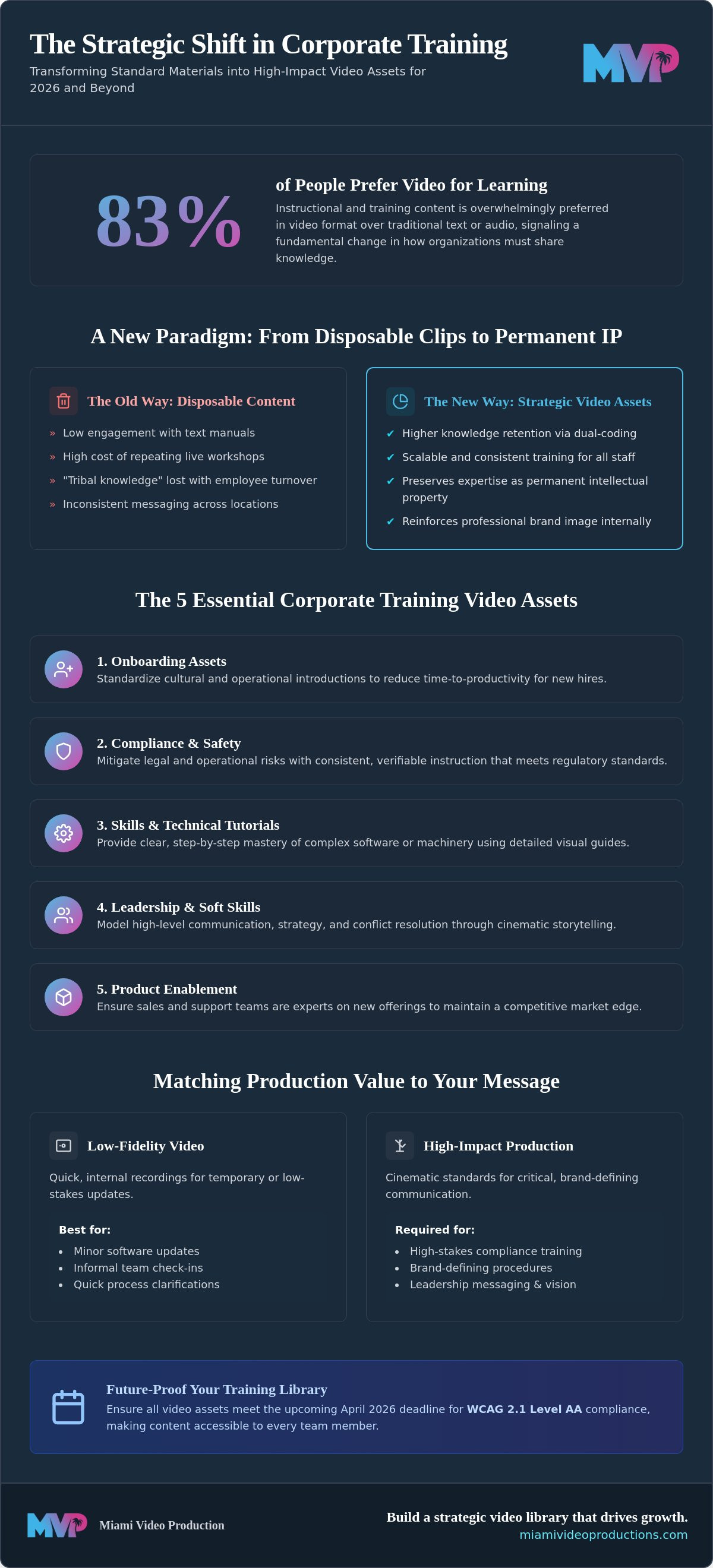
83% of people now prefer watching videos to access instructional content over traditional text or audio manuals. For leadership teams, this statistic represents a clear shift in how organizational knowledge must be preserved and shared. You've likely noticed that traditional text-based manuals often lead to low engagement, while the high cost of repeating live workshops across various office locations continues to strain budgets. Integrating sophisticated video assets for corporate training isn't just a modern convenience; it's a strategic move to ensure consistency and excellence across your entire workforce.
We believe that training content should be viewed as a vital form of intellectual property that reflects your professional brand image. This guide will show you how to transform standard materials into high-impact assets that scale knowledge and drive measurable performance. You'll learn how to navigate the 2026 enterprise landscape, including the April deadline for WCAG 2.1 Level AA compliance and the specific production strategies that lead to higher knowledge retention. We will outline the path to building a scalable content library that serves as a reliable partner in your company’s long-term growth.
Key Takeaways
- Understand the strategic shift from disposable training clips to permanent intellectual property that captures and scales your organization’s unique expertise.
- Identify the five essential video assets for corporate training designed to accelerate onboarding and maintain consistent safety standards across multiple office locations.
- Apply a professional framework to distinguish between low-fidelity internal recordings and the high-impact production required for your most critical corporate messaging.
- Learn how to implement a modular content strategy that allows your training library to evolve and grow without the expense of starting from scratch.
- Discover how cinematic production standards for internal communications can reinforce your brand’s authority and improve long-term knowledge retention.
Defining Video Assets for Corporate Training in 2026
In the current business environment, the distinction between a simple recording and a strategic asset is vital. We define video assets for corporate training as purpose-built digital media designed to capture, standardize, and scale organizational knowledge. These aren't temporary clips intended for a single use; they represent the permanent intellectual property of your firm. Historically, a Corporate film might have been viewed as a one-off project for a specific event. Today, these assets are the foundation of a sophisticated internal communication strategy that drives long-term performance and brand consistency.
The shift from "disposable videos" to "permanent intellectual property" is a response to the rapid pace of organizational change. Companies can no longer afford to rely on "tribal knowledge," which is the unwritten expertise held by a few veteran employees. When those individuals leave or move to different office locations, that knowledge often vanishes. By converting this expertise into high-quality video assets for corporate training, you ensure that the "gold standard" of performance is preserved and accessible to every team member. This approach effectively breaks down silos, creating a unified knowledge base that supports collective growth and resilience.
The Anatomy of a High-Impact Training Asset
A truly strategic asset is built with precision. It starts with a clarity of objective; a single video should focus on one specific learning outcome to prevent cognitive overload. The production value must also align with the importance of the message. While a quick screen share might work for a minor software update, high-stakes compliance or brand-defining procedures require cinematic standards to command respect and attention. Finally, these assets must be highly accessible. They should be easily searchable and fully compatible with modern Learning Management Systems (LMS) to ensure they're used, not archived and forgotten.
Why Visual Learning Dominates Corporate L&D
The science of learning supports this visual-first approach. Research into "dual coding" shows that the brain simultaneously processes auditory and visual stimuli, which leads to significantly higher knowledge retention rates. It isn't just about preference; it's about how the human mind encodes and retrieves information. By utilizing microlearning, which involves breaking complex topics into targeted, three-minute segments, organizations can reduce the mental strain on employees. This methodical approach ensures that your team doesn't just watch the content; they master the material and apply it to their daily roles with professional confidence.
The 5 Essential Types of Corporate Training Video Assets
Building a resilient training ecosystem requires more than just high-volume content production. It demands a taxonomy of specific video assets for corporate training tailored to distinct business outcomes. When leadership teams move beyond generic recordings, they can deploy a library of strategic assets that serve various departments with precision. By 2026, the most effective corporate libraries are built around five core pillars: onboarding, compliance, technical tutorials, leadership modeling, and product enablement. Each type serves a unique purpose in the employee lifecycle, ensuring that knowledge isn't just delivered but mastered.
- Onboarding Assets: These reduce the time-to-productivity for new hires by standardizing the cultural and operational introduction to the firm.
- Compliance and Safety: These mitigate legal and operational risks through consistent, verifiable instruction that meets strict regulatory standards.
- Skills and Technical Tutorials: These provide step-by-step mastery of complex software or machinery, often utilizing multi-camera perspectives for clarity.
- Leadership and Soft Skills: These use cinematic storytelling to model high-level communication and conflict resolution.
- Product Enablement: These ensure sales and support teams remain experts on new offerings, maintaining a competitive edge in the market.
As organizations look toward the future, many are exploring how AI-driven digital human reenactment technologies might supplement these pillars for rapid updates. However, for high-stakes messaging, the human element and high-fidelity production remain the gold standard for building trust. If you're unsure which category to prioritize first, developing a custom video growth strategy can help align your content production with your most immediate performance gaps.
Onboarding and Culture Integration
First impressions are permanent. Using cinematic brand films to welcome new employees allows a company to communicate its vision with an emotional resonance that text-based manuals can't replicate. These modules standardize the "First 90 Days" experience, ensuring every hire receives the same high-quality introduction regardless of their location. For remote or hybrid teams, these culture-focused videos act as a cultural North Star that keeps disparate groups aligned with a single corporate identity.
Technical Mastery and Compliance
In technical environments, visual clarity is a safety requirement. Video assets excel at demonstrating physical tasks where traditional manuals often fail to convey nuance. For regulated industries in Florida, such as healthcare or aerospace, creating "fail-safe" compliance assets is a critical risk-management tool. Utilizing multi-camera angles in these technical training videos provides learners with the comprehensive views necessary to master complex machinery or delicate procedures without the danger of live-workshop errors.
Professional Production vs. Low-Fidelity Video: A Decision Framework
Not all video assets for corporate training require a full production crew, but misjudging the "Loom Gap" can be a costly mistake for your brand's internal authority. The Loom Gap refers to the psychological distance between a casual screen recording and a polished, professional film. When a firm uses low-fidelity video for high-stakes messaging, it inadvertently signals that the content is ephemeral or unimportant. To build a library that truly scales organizational excellence, leadership teams must distinguish between content that is merely functional and content that is foundational.
The decision to invest in professional production should be guided by three primary criteria: audience size, longevity, and the stakes of the message. If an asset will be viewed by hundreds of employees over several years, the cost per view for high-end production becomes negligible. These professional assets provide a significant ROI by reducing the need for repetitive live workshops and ensuring that the "gold standard" of instruction never degrades. High-quality production values don't just look better; they drive higher engagement and respect for the material being taught.
When to Use Asynchronous Screen Captures
Asynchronous screen captures are ideal for rapid, peer-to-peer knowledge sharing or short-lived software updates. If the information has a shelf life of less than six months or is intended for a small, technical group, a quick recording is often sufficient. It's a practical tool for "quick tips" that don't impact the broader corporate culture. However, even these small choices should be part of a larger video growth strategy consulting framework to ensure that your team isn't wasting time on recordings that should have been standardized assets.
When to Invest in Cinematic Production
Cinematic production is a requirement for any content that serves as the "face" of your organization. This includes leadership messaging, high-level corporate strategy, and external-facing partner training. If you expect your video assets for corporate training to last two years or more without significant updates, they must be produced with a level of sophistication that withstands the test of time. Professional lighting, clear audio, and deliberate editing ensure that the viewer remains focused on the knowledge being shared rather than the distractions of poor production quality.
Building a Strategic Training Library: A Roadmap for L&D Leaders
Creating a few successful videos is a project; building a sustainable library is a strategy. To transition from isolated content pieces to a robust ecosystem of video assets for corporate training, L&D leaders must begin with a comprehensive audit of existing materials. This involves identifying high-traffic text manuals or outdated slideshows that would benefit from a visual transformation. By prioritizing content based on its impact on business goals, you'll ensure that every production dollar supports organizational growth.
A sophisticated library utilizes a "Modular Content" approach. Instead of filming one long, monolithic video, we recommend capturing information in smaller, discrete segments. This foresight allows for targeted updates if a specific regulation or software interface changes, saving your firm from the cost of a full reshoot. Aligning these efforts with the standards of an instructional video production company ensures that your library remains cohesive, professional, and easy to navigate as it expands.
Pre-Production and Strategic Planning
Success starts long before the cameras arrive. Identifying the right Subject Matter Experts (SMEs) is crucial; you want individuals who possess both deep knowledge and a relatable presence on screen. Scripting should focus on engagement, deliberately avoiding the "boring corporate video" tropes that lead to learner detachment. We also advise planning for multi-use by capturing high-quality footage during live events or workshops. This raw material can later be repurposed into polished training modules, maximizing the value of every filming session.
Post-Production and Lifecycle Management
The work continues after the final cut. To drive measurable performance, consider adding interactive elements like knowledge checks or branching scenarios that require active participation. Versioning is also essential for global firms, allowing you to tailor assets for different departments or regional offices without starting from scratch. Remember that even the best video assets for corporate training have a shelf-life. We suggest a formal review every 18 to 24 months to ensure your library remains accurate and aligned with current brand standards. If you're ready to begin auditing your current materials, contact our strategy team to discuss a tailored roadmap for your organization.
Partnering for Excellence: Training Video Production in Miami
Miami's status as a gateway for international business requires a level of sophistication in internal communications that matches its global reputation. For organizations based in this region, developing video assets for corporate training isn't just about recording instructions; it's about projecting a brand image that commands respect from a diverse, professional workforce. Local expertise is vital because it ensures that production logistics are seamless, whether you're operating out of a high-rise in Brickell or a corporate park in Fort Lauderdale. A local partner understands the pace of South Florida business and the specific environmental factors that can impact a shoot, from lighting conditions to venue-specific requirements.
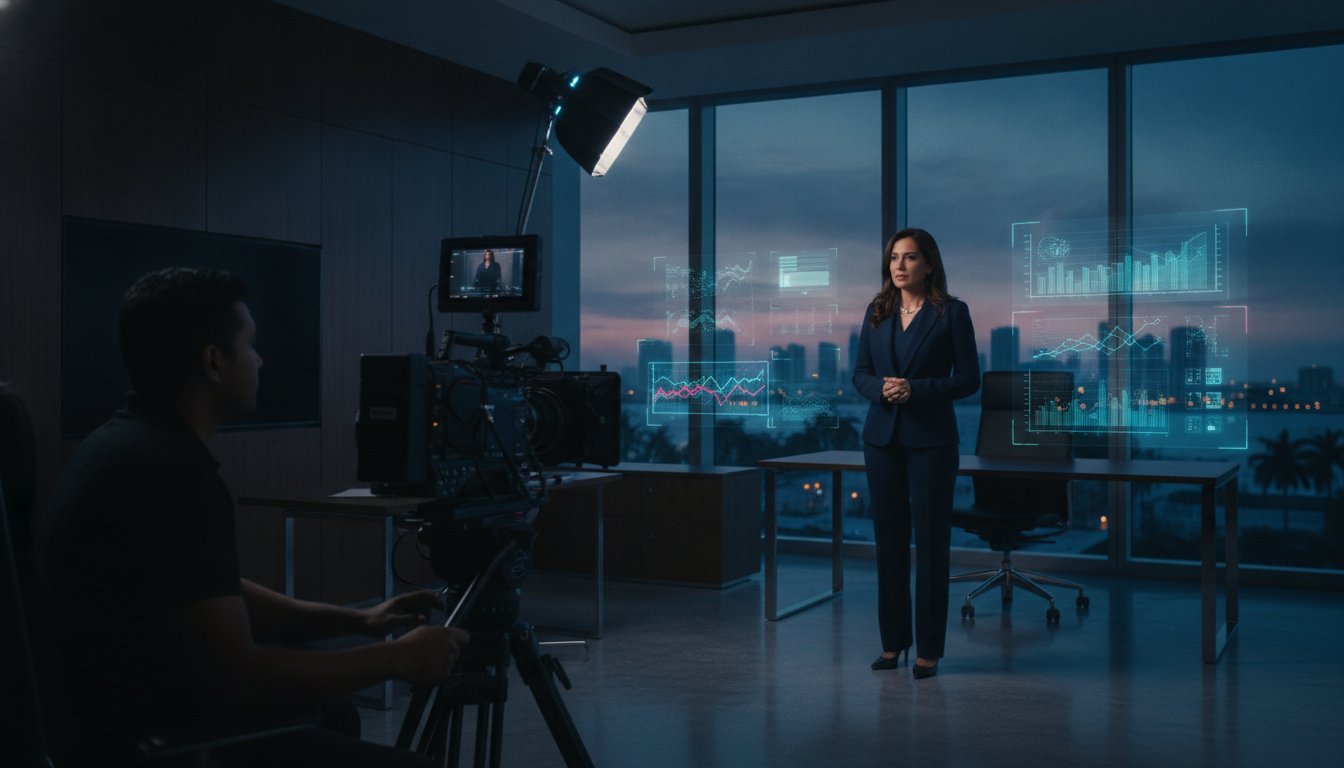
At Miami Video Production, we leverage cinematic standards usually reserved for brand films to elevate your internal training content. This high-fidelity approach ensures that your message isn't lost in poor audio or distracting visuals. Additionally, our broadcast-quality livestreaming capabilities allow for hybrid training events that feel as professional as a televised production. This is particularly effective for large-scale corporate gatherings where consistent, high-stakes instruction must be delivered to both in-person and remote attendees simultaneously. By treating training with the same production value as a broadcast event, you reinforce the importance of the material to your team.
Serving the South Florida Corporate Landscape
Managing production logistics across Miami, Fort Lauderdale, and West Palm Beach requires a partner who understands the local geography and the specific needs of Florida-based industries. We specialize in capturing high-stakes training during live corporate events, turning temporary workshops into permanent video assets for corporate training. Given Miami’s role as a multicultural hub, we also provide custom solutions to ensure your training content resonates with an international workforce, maintaining clarity and authority across cultural lines. This local presence allows for a more collaborative, hands-on approach that remote-only agencies simply cannot provide.
Your Strategic Partner in Video Growth
True excellence in training comes from moving beyond "one-off" videos toward a comprehensive content roadmap. We don't just act as a camera crew; we function as a strategic consultant to help you identify which knowledge gaps are most critical to fill with high-impact video. This partnership begins with a deep dive into your current materials and the creation of a multi-year plan for your library. Whether you're launching your first strategic training series or refreshing an existing collection, we provide the technical proficiency and strategic insight necessary to ensure your investment drives measurable business outcomes.
Contact Miami Video Production to build your training asset library today.
Future-Proofing Your Organizational Intelligence
The transition toward a video-first learning culture is no longer a future projection but a present necessity for firms seeking to maintain a competitive edge. By treating your instructional content as permanent intellectual property rather than disposable recordings, you ensure that your organization’s collective expertise remains secure and scalable. We've explored how a modular library and a clear decision framework for production quality can reduce long-term costs while significantly improving knowledge retention. High-quality video assets for corporate training serve as the foundation for this growth, providing a consistent "gold standard" of performance across your entire enterprise.
Success in this landscape requires a partner who understands the intersection of cinematic storytelling and business outcomes. At Miami Video Production, we provide the strategic consulting and broadcast-quality cinematic production necessary to transform your internal communications into high-impact assets. Whether you're managing high-stakes corporate livestreaming for global teams or building a multi-year content roadmap, our expertise ensures your vision is executed with precision. It's time to move beyond standard manuals and embrace a more sophisticated approach to knowledge sharing.
Elevate your training strategy with Miami Video Production and begin the journey of scaling your organizational knowledge with confidence. Your team's future performance starts with the quality of the assets you build today.
Frequently Asked Questions
What are the most effective types of video assets for corporate training?
Onboarding, compliance, and technical tutorials are the most impactful types for modern organizations. These assets standardize the "gold standard" of performance across global teams, ensuring that expertise isn't lost to turnover. Leadership modeling and product enablement videos also play a critical role in scaling organizational culture and ensuring sales teams remain experts on new offerings as they hit the market.
How long should a corporate training video be for maximum retention?
Aim for two to five minutes per segment to maximize learner retention and engagement. This microlearning approach aligns with the 2026 trend of delivering training in small, digestible segments rather than long-form seminars. Shorter videos reduce cognitive load and allow employees to master specific tasks without the mental fatigue often associated with hour-long recorded sessions.
Can we use screen recording software for all our training needs?
No, screen recordings should be reserved for low-stakes software updates or peer-to-peer tips with a short shelf life. Using low-fidelity recordings for leadership messaging or high-stakes compliance can damage your professional brand image and reduce the perceived importance of the material. Strategic video assets for corporate training require cinematic production when the objective is long-term knowledge retention or cultural alignment.
How much does it cost to produce a professional corporate training video series?
Industry data as of 2026 suggests that professionally produced training content typically ranges from $1,000 to $10,000 per finished minute. Basic productions often fall on the lower end, while premium assets involving custom animation or specialized actors sit at the higher end of that spectrum. The total investment depends on your specific strategic objectives and the intended longevity of the content library.
How do we measure the ROI of our video training assets?
Track ROI by monitoring knowledge retention rates, reduced time-to-productivity for new hires, and the decrease in travel costs for live workshops. 90% of L&D professionals report that video significantly improves learner engagement and mastery. By comparing these performance metrics against production costs, leadership can quantify the long-term value and durability of their training library.
Do we need a professional production company for internal compliance videos?
Yes, because the stakes of non-compliance are exceptionally high in regulated industries. Professional production ensures instructions are clear, verifiable, and meet legal standards like the April 2026 WCAG 2.1 Level AA requirements. High-quality assets signal the importance of safety protocols, which helps mitigate organizational risk more effectively than casual, in-house recordings.
What is the best way to host and distribute training videos to employees?
Most organizations utilize a Learning Management System (LMS) to host, deliver, and track their video content. As of 2025, 89% of companies use an LMS as the central hub for their training ecosystem. This ensures that video assets for corporate training are searchable, accessible, and fully integrated into broader employee development pathways and performance tracking.
How often should corporate training video assets be updated?
Review and refresh your training library every 18 to 24 months to maintain accuracy and brand relevance. While some foundational culture films may last longer, technical tutorials or compliance videos often require updates as software interfaces or regulations evolve. A modular production approach allows you to update specific segments easily without the need for a full reshoot of the entire series.
