Importance of Creating Content for B2B Conferences
Most B2B conferences end the same way. Handshakes, exchanged business cards, and a slow fade into irrelevance. 60% of B2B marketers say in-person events are an effective lead generation tactic, yet most brands walk away with little to show for it. The difference between a forgettable conference and a lead-generating machine? Content.
The right content strategy turns a single event into months of pipeline fuel. Here's what we'll cover:
Why most B2B conference content falls flat
How to create pre-event content that builds buzz
Leveraging livestreaming and video production to expand your reach
Repurposing conference content for long-term lead generation
Measuring content ROI from B2B events
Let's break it all down. Time to turn your next conference into a content engine.
Why Most B2B Conference Content Falls Flat
You spend thousands on a booth, fly in your team, and shake a hundred hands. Then what? Most brands treat conferences like isolated events instead of content opportunities. That's the first mistake.
The Core Problem
Conference content fails because it's reactive, not strategic. Brands show up, snap a few photos, maybe post a generic recap on LinkedIn, and call it a day. Meanwhile, nearly 70% of marketers invest in content marketing, yet only 30% feel their content is actually effective.
Here's where most B2B brands go wrong:
No content plan before the event. They wing it. No shot list, no pre-planned interviews, no livestreaming strategy to extend reach beyond the room.
Generic, forgettable recaps. A carousel of booth photos won't generate leads. Period.
Zero repurposing strategy. One post-event blog and the content dies. No clips, no highlight reels, no follow-up sequences.
Talking at attendees, not with them. Content that reads as a press release connects with nobody.
The Missed Opportunity
78% of B2B marketers now allocate budget toward experiential marketing, but less than a third rate their efforts as established or advanced. That gap? It's where leads slip through the cracks.
The fix isn't more content. It's smarter content with a clear plan for capturing, producing, and distributing it before, during, and after the event.
How to Create Pre-Event Content That Builds Buzz
The conference doesn't start when the doors open. It starts weeks before, when your audience first hears about it. If you wait until the day of, you've already lost momentum.
Start With a Content Calendar
Map out your pre-event content at least 4-6 weeks in advance. This gives you enough runway to build anticipation and capture early attention. Think of it as warming up the crowd before the main act.
Your pre-event content calendar should include:
Speaker teaser clips. Film 30-60 second videos of your keynote speakers sharing one insight they'll cover. Short. Punchy. Scroll-stopping.
Behind-the-scenes content. Show the setup, the prep, the energy. People want to see the process, not just the polished result.
Countdown posts on social media. Use LinkedIn, Instagram, and email sequences to build a drumbeat leading up to the event.
Blog posts tied to session topics. Write about the problems your conference will solve. This doubles as SEO fuel and gives attendees a reason to care.
Make Registration Feel Urgent
You need more than a landing page with a form. Create content that makes people feel like they'll miss out. Share early attendee lists (with permission), spotlight VIP networking opportunities, or publish a sneak peek of the agenda.
Pair your pre-event blog content with a social media marketing strategy that targets your ideal attendee profile. Organic reach alone won't cut it. You need paid amplification alongside it.
Leveraging Livestreaming and Video Production to Expand Your Reach
Your conference has a ceiling. Only so many people can attend in person. Livestreaming removes that ceiling entirely.
Why Video Changes the Game
93% of marketers say video marketing has delivered a positive ROI, and the B2B space is no exception. When you capture your conference on video, you create content that works long after the last attendee walks out.
But there's a difference between recording an event and producing content from an event. Recording is passive. Production is strategic.
What Professional Event Video Looks Like
A professional event livestreaming setup typically includes:
Element
Purpose
Multi-camera coverage
Captures speakers, audience reactions, and wide shots for dynamic editing
Branded lower thirds
Reinforces your brand on every frame of the stream
Real-time switching
Keeps the broadcast visually engaging for remote viewers
Dedicated audio feed
Ensures clean sound, because bad audio kills credibility faster than bad visuals
This isn't the kind of thing you hand off to an intern with an iPhone. Brands like Netflix, NASCAR, and Bank of America rely on experienced video production teams like VG Creations to deliver broadcast-quality content for their events. The production value signals that your brand belongs in the conversation.
Hybrid Is the New Standard
78% of B2B marketers are now allocating budget toward experiential marketing, and hybrid events sit at the center of that shift. A well-produced livestream lets remote attendees participate in real time through Q&A, polls, and chat. It also gives you a full recording to repurpose later.
That's not a bonus. That's the whole strategy.
Repurposing Conference Content for Long-Term Lead Gen
One conference. Dozens of content pieces. That's the formula most brands ignore completely.
The Content Multiplier Effect
Think of your conference as raw material. Every keynote, panel discussion, and hallway interview is a goldmine of content waiting to be extracted. Wistia found that clips pulled from a single webinar recording generated 8.5x more watch time than the live event itself. Conferences have even more material to work with.
Here's how to break down a single 45-minute keynote into a full content ecosystem:
3-5 short video clips (60-90 seconds each) for LinkedIn, Instagram Reels, and YouTube Shorts
1 long-form blog post summarizing the key takeaways with embedded video
1 email nurture sequence that drips insights to attendees and registrants over 2-4 weeks
Quote graphics pulled from the speaker's best moments
A podcast episode repurposing the audio with added commentary
Gated Content That Captures Leads
Take your best conference sessions and turn them into gated on-demand content. On-demand webinars can increase total views by up to 80%. The same applies to recorded conference sessions behind a simple registration form.
This is where content stops being a cost and starts becoming a lead generation engine. Every form fill is a new contact in your CRM. Every view is a signal of intent.
Pro Tip: Don't dump all your repurposed clips at once. Space them out over weeks or even months. This keeps your brand visible long after the event ends and avoids audience fatigue.
Measuring Content ROI From B2B Events
You can't improve what you don't measure. And you definitely can't justify next year's conference budget without hard numbers.
The Metrics That Actually Matter
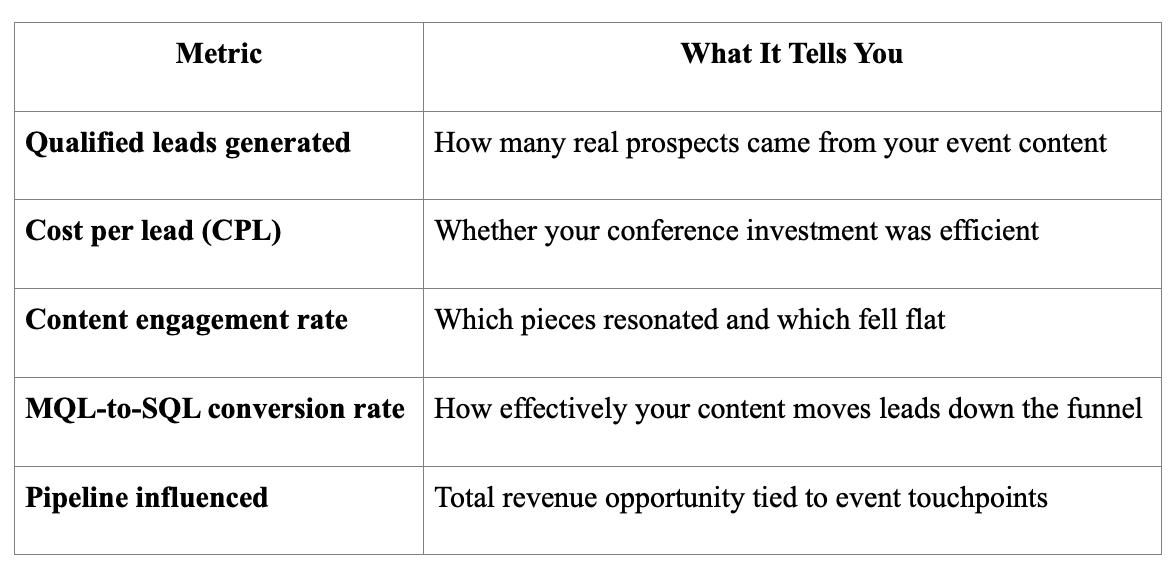
Forget vanity metrics. Impressions and likes look nice in a report, but they don't pay the bills. 90% of B2B marketing teams now report on ROI, so you need to track metrics that connect content directly to revenue.
Here are the KPIs worth tracking:
Build a Measurement Framework
Start before the event. Set your benchmarks, define what a "qualified lead" means for your team, and make sure your CRM is tagged to track conference-sourced contacts separately.
During the event, monitor livestream viewership, chat engagement, and session attendance in real time. After the event, track how repurposed content performs over 30, 60, and 90 days.
Close the Loop With Sales
The biggest measurement gap in B2B? Marketing and sales not talking to each other. Your event content generates the lead. Sales needs to close it. If there's no feedback loop between the two, you'll never know the true ROI of your conference content.
Pro Tip: Schedule a joint marketing-sales debrief within one week of the event. Review lead quality, identify hot prospects, and align on follow-up sequences. The brands that do this consistently outperform the ones that treat events like isolated campaigns.
Ready to Turn Your Next Conference Into a Content Machine?
The brands winning at B2B conferences aren't the ones with the biggest booths. They're the ones with a content strategy that starts weeks before the event and keeps generating leads months after it ends. Plan ahead, capture everything, repurpose relentlessly, and measure what matters.
Key takeaways
Most conference content fails because it's reactive, not strategic
Pre-event content builds buzz and drives higher-quality attendance
Livestreaming and professional video production remove the attendance ceiling
One conference can fuel dozens of content pieces across multiple channels
Track qualified leads, CPL, and pipeline influenced to prove real ROI
Creating content for B2B conferences is only as powerful as the team behind the camera. Whether you need multi-camera livestreaming, highlight reels, or a full post-event content strategy, Miami Video Production helps brands turn live moments into a long-term pipeline. The production quality speaks for itself. The leads that follow speak even louder.