
Strategic Best Practices for Livestreaming Corporate Town Halls in 2026
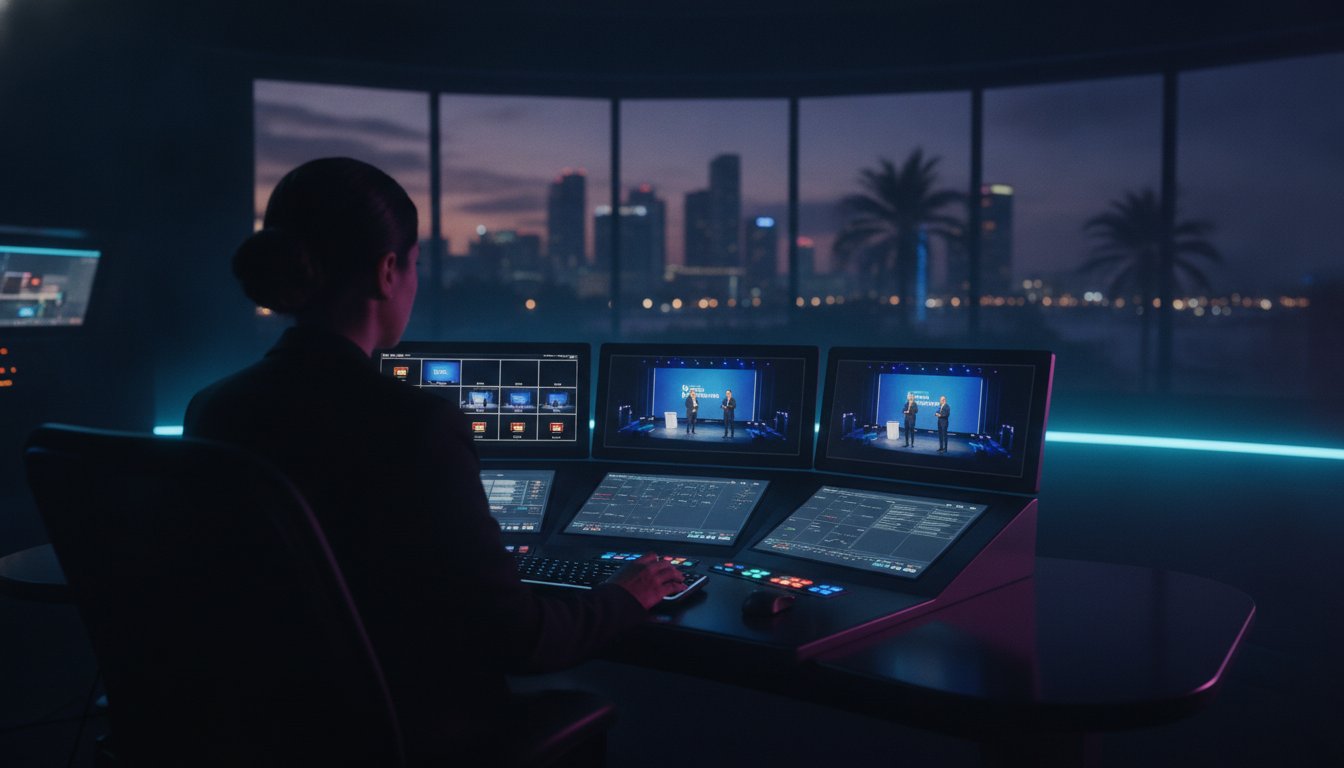
Your CEO’s annual address shouldn't feel like a low-resolution video call; it should feel like a premium broadcast that commands attention. When it comes to livestreaming for corporate town halls, the stakes have shifted from simple connectivity to high-stakes strategic alignment. You've likely felt the tension in the production booth when a remote feed lags or an executive's audio cuts out during a critical announcement. It's a vulnerability that can undermine leadership confidence and leave global teams feeling disconnected in an increasingly hybrid world.
You can eliminate these technical risks while significantly boosting employee sentiment scores through intentional production. This guide provides the technical and strategic framework you need to deliver a flawless execution that resonates with every viewer. We'll examine the essential redundancies for 2026, sophisticated methods for bridging the gap between in-person and remote audiences, and the production standards required to turn a live event into a high-value asset for your video library. By the end, you'll have the roadmap to secure executive confidence and deliver a broadcast-quality experience that reflects the excellence of your brand.
Key Takeaways
- Learn how implementing the "Rule of Two" for hardware and encoding creates a fail-safe architecture that secures executive confidence during live addresses.
- Discover why a "Hybrid First" strategy is the key to successful livestreaming for corporate town halls, ensuring remote teams feel as valued as in-person attendees.
- Explore the critical pre-production steps, including venue site surveys in Miami and detailed Run-of-Show development, to ensure flawless technical execution.
- Understand the value of a strategic technical partner who provides professional direction and cinematic quality rather than just standard video coverage.
What is Broadcast-Quality Livestreaming for Corporate Town Halls?
To understand the future of executive communication, we must first define what broadcast-quality livestreaming is in a professional context. It isn't simply a high-definition webcam feed. True broadcast-quality livestreaming for corporate town halls involves a sophisticated ecosystem of multi-camera switching, hardware-based encoding, and cinematic lighting designed to mirror the production value of a network television segment. While standard web conferencing tools like Zoom or Microsoft Teams are indispensable for daily collaboration, they often falter during high-stakes leadership addresses because they prioritize speed over visual and audio fidelity. This prioritization often leads to pixelation, audio clipping, and a general sense of digital fatigue that can diminish the weight of an executive's message.
The core components of a professional setup include:
- Professional-Grade Encoders: Dedicated hardware that processes video data more efficiently than a standard laptop.
- Redundant Internet Pathways: Bonded cellular or secondary fiber lines to prevent a total stream collapse if the primary connection fails.
- Multi-Camera Directing: Dynamic switching between wide shots, close-ups, and presentation slides to maintain viewer interest.
- Cinematic Lighting: Professional three-point lighting that ensures leaders look authoritative and polished on screen.
Broadcast Standards vs. Basic Web Meetings
Visual clarity is a proxy for brand health. When a company uses low-bitrate streams for a global town hall, it sends a subtle signal about its attention to detail. High-fidelity streams maintain consistent frame rates and deep bit depths, ensuring that every facial expression and slide detail remains crisp. Audio engineering is equally critical. A professional production manages multiple speakers and remote guests through a dedicated mixing board, eliminating the echo and background noise that plague standard calls. Having a technical director on-site provides real-time quality control, allowing them to adjust levels or switch feeds instantly if a technical hiccup occurs.
The Strategic Value of 'Cinematic' Internal Comms
Your employees are your most important audience. Treating them with the same production respect you'd give an external customer fosters deep alignment and trust. By moving away from the "webinar" aesthetic, you significantly reduce the fatigue associated with standard video calls. Employees are more likely to stay engaged and retain information when the content feels like a premium experience rather than another chore. Additionally, these high-quality productions create a lasting VOD asset. A broadcast-quality recording serves as a powerful tool for onboarding new hires and archiving company milestones, preserving the culture in a way that a grainy meeting recording never could.
Technical Fail-Safes: Building a Reliable Streaming Architecture
Technical reliability in a live environment is the result of deliberate engineering, not luck. For high-stakes events, we implement "The Rule of Two" across the entire production stack. This framework dictates that every critical component, from power supplies to signal paths, has an active or hot-standby backup. During the execution of livestreaming for corporate town halls, this redundancy is what separates a professional broadcast from a risky experiment. It ensures that even if a piece of hardware fails, the message continues uninterrupted.
A primary fail-safe involves redundant encoding. Relying on a single hardware unit or, worse, a software-based encoder on a standard laptop, creates a single point of failure that can derail an entire address. We utilize dual hardware encoders that stream to separate entry points. If one unit loses power or experiences a processor hang, the backup continues the transmission without the audience ever noticing a glitch. This level of technical security is non-negotiable when an executive's reputation is on the line.
Connectivity is the next pillar of security. Venue ethernet is often shared or subject to local outages that are outside of your control. By utilizing bonded cellular technology, including 5G and Starlink, we create a unified, high-bandwidth pipe that remains stable even if the building’s primary ISP fails. This level of sophistication in building a reliable streaming architecture is essential for maintaining executive confidence and ensuring a global reach without interruption.
Multi-Camera Livestreaming for Dynamic Storytelling
Single-camera setups are a relic of the past that often lead to audience disengagement within minutes. A strategic multi-camera approach keeps the visual narrative moving, using wide shots to establish the environment and tight crops to capture the emotional nuance of the speaker. For a deeper look at how this works in practice, explore our resource on Multi Camera Livestreaming in Miami: The Strategic Guide for High-Stakes Events. This variety isn't just for aesthetics; it's a tool for maintaining focus in a hybrid world.
Signal Path and Latency Management
The choice of transport protocol defines the interactivity of your event. While RTMP is the industry standard for reach, SRT (Secure Reliable Transport) offers better stability over unpredictable networks. If your town hall requires near-instantaneous Q&A, we look toward WebRTC to minimize lag. Reducing this "glass-to-glass" delay ensures that remote participants feel like active contributors rather than passive observers. Professional technical direction transforms these complex layers into a seamless experience. If you're planning a high-pressure address, consider how a strategic production partner can secure your technical architecture and elevate your brand's internal presence.
Engagement Best Practices for Hybrid Town Halls
Successful engagement in a modern corporate setting requires a "Hybrid First" mindset. It's no longer enough to simply point a camera at a stage and hope the remote audience follows along. When executing livestreaming for corporate town halls, you must prioritize the remote experience as if those viewers were the only ones in the room. This approach prevents the sense of isolation that often leads to declining participation and ensures that your global team feels as connected to the leadership as the employees sitting in the front row.
Integrating real-time Q&A modules with professional moderation is one of the most effective engagement best practices for high-stakes events. Rather than a chaotic free-for-all, a moderated queue allows for the filtering of duplicate questions and ensures that the most relevant topics reach the executive team. This process maintains a professional flow while demonstrating that leadership is genuinely listening to employee concerns. Additionally, using branded lower-thirds and high-fidelity graphics reinforces your corporate identity, making the internal broadcast feel as polished as a public-facing brand film.
- Interactive Polling: Use live polls to gather instant feedback on new initiatives or company culture.
- Sentiment Tracking: Monitor real-time reaction data to gauge how specific announcements are being received.
- Visual Identity: Deploy professional overlays that display speaker names, titles, and key takeaways.
Bridging the Gap Between In-Person and Remote
A common mistake in hybrid events is ignoring the remote audience's presence within the physical venue. We recommend using confidence monitors to visualize the remote audience for on-site speakers, allowing them to make eye contact with digital participants. Ensuring that remote questions are broadcast clearly through the local PA system is also vital so the physical audience feels the weight of the global conversation. For a comprehensive look at these logistics, see our guide on How to Plan a Hybrid Conference Livestream in Miami: A Strategic Production Guide. This integration transforms a lecture into a two-way dialogue.
Interactive Graphics and Visual Overlays
Visual dynamics matter. Switching between Picture-in-Picture (PIP) and full-screen graphics prevents visual stagnation. When discussing quarterly results or KPIs, real-time data visualization helps employees digest complex information quickly. We also utilize countdown clocks and "Starting Soon" slates with high-quality background audio to build anticipation before the event begins. These small production details signal to your team that the town hall is a significant event worth their full attention, not just another background task on their secondary monitor. Professional graphics don't just decorate the screen; they provide a structural framework for your strategic narrative.

Pre-Production and Local Logistics: Planning Your Miami Town Hall
The success of livestreaming for corporate town halls is determined long before the first camera turns on. In high-stakes environments, pre-production serves as a strategic de-risking process that transforms a standard meeting into a polished broadcast. This phase begins with a comprehensive venue site survey. In South Florida, this step is vital. We assess the physical infrastructure of Miami and Fort Lauderdale venues to verify dedicated upload speeds and analyze acoustic properties that could impact audio clarity. Without this foundational data, even the most expensive equipment cannot guarantee a stable connection.
Our planning framework follows five critical steps to ensure absolute reliability:
- Step 1: Venue Site Survey: Rigorous testing of local ISP stability and acoustic dampening.
- Step 2: Run-of-Show (ROS) Development: Creating a minute-by-minute technical roadmap.
- Step 3: Speaker Coaching: Preparing executives to maintain "eye contact" with the lens to engage remote viewers.
- Step 4: Technical Rehearsals: A full dress run-through 24 hours prior to identify and resolve any friction points.
- Step 5: Distribution Strategy: Selecting a secure platform like a private portal or Vimeo to manage access and security.
If you're ready to move beyond basic video calls and secure your next executive address, you can partner with our Miami production team to handle these complex logistics for you.
Navigating South Florida Venue Challenges
South Florida presents unique logistical hurdles that can catch unprepared teams off guard. Older ballrooms in Miami or West Palm Beach often feature thick, signal-blocking walls and outdated electrical circuits that struggle with modern production loads. In high-traffic corporate hubs like Fort Lauderdale, ambient noise from urban activity can bleed into sensitive microphones. Understanding these local nuances is central to our approach. For a detailed look at navigating these specific regional requirements, see our guide on Event Livestreaming Services in Miami: The 2026 Guide to Broadcast-Quality Production. We ensure your technical foundation is as strong as your message.
Developing a Strategic Run-of-Show
An agenda tells you what will be said; a technical Run-of-Show tells the crew how it will be seen. This document includes precise timing cues for video playback, slide transitions, and guest speaker hand-offs. It's the difference between a clunky transition and a seamless broadcast experience. We also build in "What If" scenarios. If a remote guest loses their connection, the ROS includes a pre-planned bridge or graphic to keep the audience engaged while the technical director resolves the issue. This level of preparation ensures that your town hall maintains its momentum regardless of external variables.
Why Partner with a Strategic Production Agency?
Executing a high-stakes executive address requires a shift in perspective. You aren't just hiring a cameraman; you're securing a strategic technical partner. While many vendors can provide basic equipment, a strategic agency focuses on how the production aligns with your long-term business growth and brand identity. In the high-pressure environment of livestreaming for corporate town halls, the technical direction is as much about risk management as it is about visual aesthetics. It’s about ensuring that the medium doesn't distract from the message, but rather amplifies it with professional authority.
Miami Video Production bridges the gap between cinematic art and corporate strategy. We understand that a town hall is a significant investment of time and resources. By providing broadcast-standard production values, we help you transform a routine update into a powerful brand asset. This partnership ensures that every technical decision, from the choice of encoder to the lighting setup, is made with your specific strategic objectives in mind. When the stakes are high, professional direction provides the security you need to lead with confidence.
Expertise Under Pressure
Executives trust professional crews because they understand that their public image is tied to the quality of the broadcast. There's a significant "Peace of Mind" factor in knowing that a seasoned team is managing the complexities of signal paths and internet redundancy. This allows your internal communications team to focus on the narrative and speaker preparation rather than troubleshooting hardware. We've seen companies transition from standard, grainy meetings to polished broadcast events, and the impact on employee perception is immediate. A professional crew doesn't just show up; they protect your leadership's reputation by ensuring a flawless delivery every time.
Post-Event Strategy and Content ROI
The value of a town hall shouldn't end when the stream stops. A strategic partner helps you maximize your return on investment by treating the live event as a content engine. We provide high-quality recordings that can be repurposed into highlight reels for social media, internal newsletters, or executive LinkedIn updates. Additionally, we use video analytics to measure employee engagement and sentiment, providing data-driven insights for your next address. For a deeper look at how to integrate these assets into your broader marketing goals, explore our resource on Video Growth Strategy Consulting: The 2026 Roadmap for B2B Brands. By viewing livestreaming for corporate town halls through a strategic lens, you turn a single hour of programming into a long-term tool for organizational alignment.
Elevating Your Leadership Voice Through Strategic Production
The landscape of internal communication has shifted from simple updates to high-stakes brand moments. Mastering livestreaming for corporate town halls in 2026 requires more than just a stable connection; it demands a commitment to technical redundancy and a cinematic approach to engagement. By prioritizing the remote experience and implementing the "Rule of Two" for every critical hardware component, you transform potential technical vulnerabilities into a platform for executive confidence. These strategies ensure your global team remains aligned, inspired, and connected to the company's core mission.
A successful town hall is the result of meticulous pre-production and a partnership with experts who understand the nuances of broadcast standards. When you move beyond basic video calls and embrace professional direction, you secure your message and your reputation. Secure your next high-stakes town hall with Miami's broadcast-quality production experts. Our team provides specialized technical direction for Fortune 500 events, utilizing cinematic 4K multi-camera setups and the security of redundant 5G bonded internet. Let's partner to ensure your next address is delivered with the excellence your brand deserves.
Frequently Asked Questions
What is the best platform for a secure corporate town hall livestream?
The ideal platform depends on your specific security needs, but enterprise-grade solutions like Vimeo OTT, Microsoft Stream, or a custom-built private portal are the industry standards. These platforms provide robust single sign-on (SSO) integration and domain-restricted viewing. This ensures that sensitive leadership addresses remain internal and protected from unauthorized access.
How much bandwidth do I need for a 4K corporate livestream?
You need a sustained upload speed of at least 25 to 30 Mbps for a single 4K stream. For professional livestreaming for corporate town halls, we recommend a total venue capacity of 50 Mbps or higher to provide a safe buffer. This extra overhead maintains high-fidelity visual data even during minor network fluctuations.
Can I integrate remote speakers into a live town hall in Miami?
Yes, you can integrate remote executives seamlessly using high-fidelity transport protocols like SRT or professional remote guest platforms. These feeds are routed directly into the local production switcher in Miami. This allows the technical director to switch to remote speakers as easily as they would to a physical camera on the stage.
What is the difference between a webinar and a professional town hall production?
A webinar typically relies on basic webcams and software-based switching, while a professional production utilizes cinematic 4K cameras and dedicated hardware encoders. The result is a broadcast-quality experience that mirrors network television. This elevated production value is designed to command attention and reinforce executive authority in a way that standard meeting software cannot.
How do I handle Q&A for a hybrid audience of 1,000+ employees?
Managing a large-scale Q&A requires a moderated digital queue where remote and in-person employees submit questions through a secure portal. A dedicated moderator filters these submissions for relevance and clarity before presenting them to the executive team. This structured approach maintains a professional rhythm and ensures the most impactful questions are addressed during the live broadcast.
What equipment is needed for a multi-camera corporate town hall?
Core equipment includes multiple 4K cinematic cameras, a hardware video switcher, a digital audio console, and primary and backup hardware encoders. You also need professional three-point lighting and confidence monitors for the speakers. These monitors allow executives to see their slides and the remote audience, fostering a more natural and engaging delivery.
How much does a professional corporate livestream cost in Miami?
Investment levels vary based on the number of cameras, the length of the program, and the complexity of the technical direction required. Factors such as venue site surveys and the deployment of redundant 5G bonded internet also influence the final production budget. We recommend a strategic consultation to align the production scope with your specific event goals and technical requirements.
What happens if the venue internet goes out during the live event?
If the primary venue internet fails, a professional system instantly switches to a redundant pathway, such as 5G bonded cellular or a secondary ISP. This fail-safe is a critical component of livestreaming for corporate town halls. It ensures the stream stays live and the global audience remains connected without noticing any technical friction or loss of signal.
