
The 2026 Checklist for Reliable Livestreaming for Conferences: A Strategic Production Guide
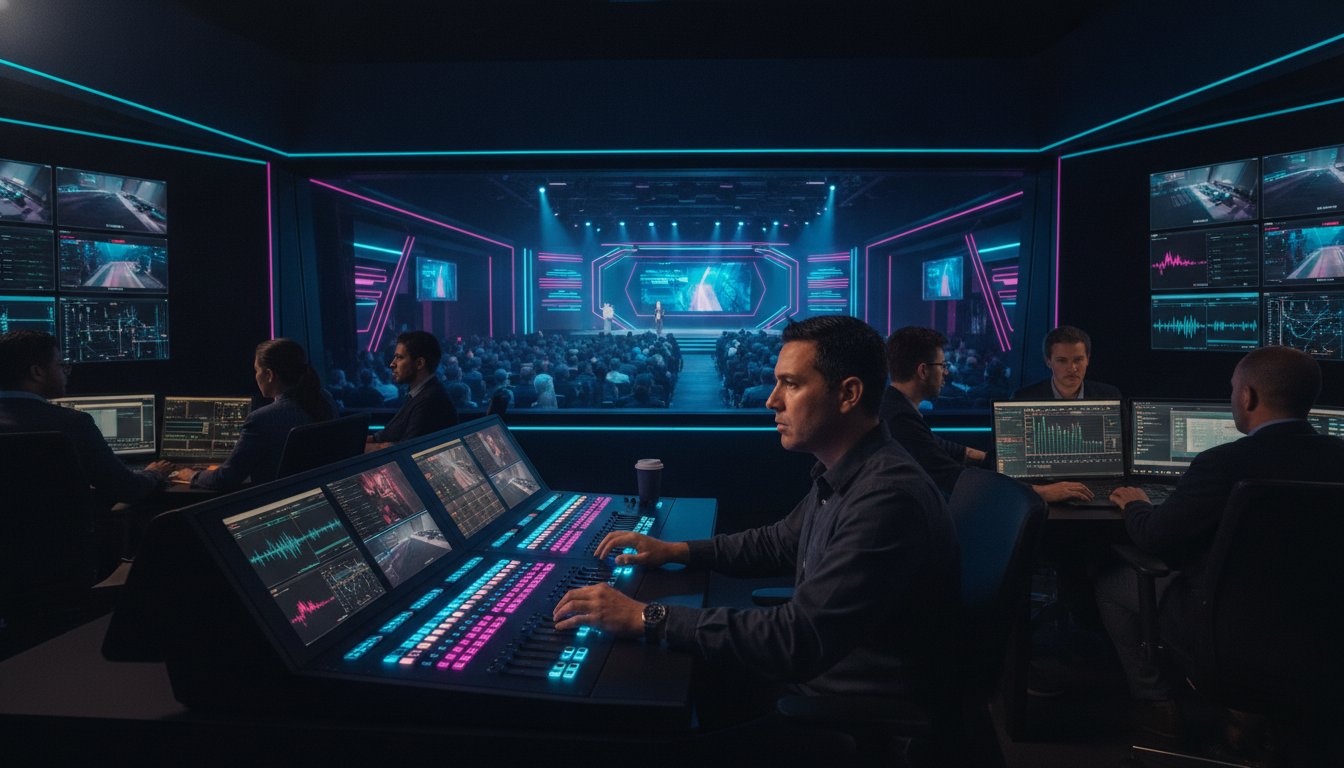
Did you know that for a small business, a single minute of technical downtime can cost as much as $427? For a high-stakes corporate conference, that figure scales exponentially, threatening not just your budget but your brand's professional reputation. You've likely felt that pit in your stomach when a keynote speaker begins and the video feed stutters. It's a common anxiety because the line between a seamless broadcast and a technical disaster is often thinner than most organizers realize, especially when the difference between a basic web call and a broadcast-quality production is misunderstood.
Achieving reliable livestreaming for conferences isn't just about choosing the right software; it's about implementing a rigorous framework of hardware redundancy and strategic technical direction. This guide will show you how to master the technical fail-safes and strategic planning required to ensure your high-stakes event never fails. We'll break down the essential 2026 checklist for broadcast-quality execution, from bonded cellular solutions to the specific criteria you must use when vetting a production partner for zero-downtime results. By the end of this guide, you'll have a clear framework to move from technical uncertainty to premium reliability.
Key Takeaways
- Master the 99.9% uptime standard by implementing redundant signal paths and dual-stream encoder configurations to eliminate technical vulnerabilities.
- Learn how to secure reliable livestreaming for conferences by integrating bonded cellular hardware as a mission-critical backup to venue fiber.
- Define the essential crew roles, including the Technical Director, required to navigate the high-pressure environment of live multi-camera production.
- Navigate the logistics of South Florida event spaces by auditing venue connectivity and managing in-house A/V service limitations effectively.
- Shift your perspective from equipment rentals to strategic partnerships by using our framework to vet production agencies on their fail-safe expertise.
Defining Reliable Livestreaming for Conferences in 2026
"Reliability" is often used as a marketing buzzword, but in the context of a 2026 corporate summit, it has a very specific technical definition. It is the difference between hoping the venue Wi-Fi holds up and knowing your signal is backed by multiple independent data sources. True reliable livestreaming for conferences demands a 99.9% uptime standard. This is not an arbitrary number. It represents a commitment to redundant signal paths where every piece of the production chain has a "hot" backup ready to take over in milliseconds. When the stakes involve thousands of remote attendees and high-value sponsorships, a single minute of black screen can derail your entire strategic narrative.
Broadcast Standards vs. Web Meeting Standards
Standard web conferencing tools are designed for two-way communication where minor lag is acceptable. Broadcast-quality events operate on a different plane. They utilize higher bitrates and consistent frame rates to ensure that every slide transition and speaker gesture is captured with cinematic precision. Broadcast-quality livestreaming is the integration of multi-source switching and redundant encoding. By looking back at the history and technology of livestreaming, we see that the shift from software-based "meetings" to hardware-based "broadcasts" is what separates professional agencies from amateur setups. Dedicated encoders prevent the CPU spikes and crashes that often plague laptop-driven streams.
The ROI of Reliability in Corporate Comms
The psychological weight of a high-end production cannot be overstated. When a remote executive tunes into a stream that looks and sounds like a professional news broadcast, they are more likely to stay engaged for the duration of the keynote. Professionalism breeds trust. If the stream stutters, the audience begins to question the organization's attention to detail in other areas. Strategic livestreaming removes the "second-class" feeling often experienced by remote attendees. It creates a unified experience that enhances brand authority and ensures your global stakeholders receive the same impact as those sitting in the front row. This is not just a technical requirement. It is a strategic investment in your brand’s global reputation.
The Essential Technical Redundancy Checklist
Reliability isn't a setting you toggle on; it's a physical infrastructure you build. While many organizers focus on the visual aesthetics of the stream, the most critical work happens behind the scenes in the signal chain. Achieving reliable livestreaming for conferences requires a "no single point of failure" philosophy. If a cable is stepped on, a modem resets, or a platform crashes, the show must continue without the audience ever knowing there was a glitch. This level of security is built through layers of hardware redundancy that software alone cannot provide.
Internet Connectivity: Beyond the Venue Wi-Fi
Relying solely on shared hotel or convention center Wi-Fi is a high-stakes gamble. These networks are notoriously unpredictable. Hundreds of attendees connecting their devices can instantly throttle your upload bandwidth at the exact moment your keynote begins. Professional production teams bypass this by creating a private "super-pipe" through bonded cellular technology. Devices like LiveU or Peplink combine multiple cellular signals from different carriers with a hardline ISP connection. This creates a single, robust connection that can withstand the loss of any individual source. For a standard 1080p broadcast, you need a consistent upload speed of 10-15 Mbps. If you are moving to 4K, aim for at least 25 Mbps to maintain broadcast integrity.
Signal Path Redundancy
Hardware encoders are the backbone of a professional setup. They are purpose-built for high-pressure environments. Unlike a laptop running software, a dedicated hardware encoder won't decide to run a background update or experience a CPU spike in the middle of a session. A dual-stream setup sends two identical signals to the cloud simultaneously. If your primary streaming platform experiences an outage, your backup is already live and receiving the signal. Your hybrid conference livestreaming Miami strategy must also include a local, high-bitrate recording. This ensures that even if the entire internet grid fails, you still have a pristine "broadcast master" ready for immediate on-demand distribution.
Technical fail-safes extend to the audio and power as well. Every critical piece of gear should be plugged into an Uninterruptible Power Supply (UPS) to guard against venue power surges or accidental unplugs. On the audio side, we deploy independent mix-minus loops and backup microphones to ensure the speaker's voice is never lost. These layers of protection are what separate a standard web call from a premium broadcast. If you want to ensure your next event is bulletproof, consider how a strategic production partner can manage these complex infrastructure requirements for you.
The Human Element: Crew Roles for Zero-Failure Execution
Hardware redundancy provides the safety net, but the human element provides the execution. For reliable livestreaming for conferences, you cannot expect a single individual to manage the technical infrastructure while simultaneously focusing on the creative flow. High-stakes environments demand a specialized crew where each member manages a specific potential failure point. When a production team operates in sync, the technology becomes invisible, allowing the speaker's message to take center stage without the distraction of technical stumbles.
The Technical Director (TD) acts as the pilot of your conference stream. They are responsible for the real-time switching between cameras, presentation slides, and pre-recorded media. This role is the critical bridge between the creative vision and the technical reality of the broadcast. Without a dedicated TD, the rhythm of the event suffers. This often leads to awkward silences or missed visual cues that alienate remote viewers and diminish the perceived authority of the brand. Professional technical direction for live events ensures that every transition is intentional and every lower-third graphic appears at the precise moment it is needed.
While video captures the audience's attention, audio carries the actual information. A dedicated Audio Engineer ensures the mix is balanced perfectly for both the in-room attendees and the remote stream. They manage independent mix-minus loops to prevent echoes and ensure that remote speakers can hear the room clearly. Simultaneously, a Streaming Engineer monitors the "health" of the broadcast. They track bitrates, frame drops, and encoder performance in real-time. They stand ready to trigger the failover protocols discussed in previous sections if a network dip occurs, ensuring the audience never sees a spinning loading icon.
Multi-Camera Switching Strategy
Coordination among camera operators is what transforms a standard recording into a cinematic experience. A "Standard Three" setup typically includes a wide shot for context, a tight shot for emotional connection with the speaker, and a dedicated feed for presentation slides. This variety keeps remote stakeholders engaged by mimicking the visual language of a professional news broadcast. For specific camera placement tips tailored to South Florida venues, refer to our guide on multi camera livestreaming Miami.
The Importance of Production Comms
Effective execution relies on a robust, private communication system. Every crew member wears a headset, allowing the TD to call shots and warn operators of upcoming transitions. This internal "comms" loop prevents the frantic, uncoordinated movements that characterize amateur productions. It allows the team to troubleshoot minor issues silently behind the scenes without the presenter or the audience ever becoming aware of a problem. This level of professional coordination is what defines a zero-failure event.

Venue Logistics and South Florida Connectivity Factors
The geographic context of your event is a critical variable in the production equation. Achieving reliable livestreaming for conferences within the South Florida market requires an understanding of local infrastructure that goes beyond a simple speed test. Miami and Fort Lauderdale offer a diverse range of venues, from historic properties in Coral Gables to state-of-the-art convention centers in Miami Beach. Each presents unique logistical hurdles, including varying levels of fiber-optic availability and complex administrative requirements that can impact your production timeline and budget.
Strategic planning must account for venue-specific constraints such as in-house A/V exclusivity clauses and union labor requirements. Many major Miami hotels mandate the use of their preferred providers for basic rigging or power, which requires a collaborative approach to ensure your specialized production team can integrate seamlessly. Additionally, the tropical climate is a factor often overlooked. If your conference includes outdoor sessions or rooftop keynotes, hardware must be protected from the intense heat and high humidity of the Atlantic coast. Electronic components can fail rapidly in 90-degree temperatures without active cooling solutions or shaded staging areas.
Miami Venue Bandwidth Audits
Never take a venue's "high-speed internet" claim at face value. A professional audit involves testing the actual upload stability during peak hours, not just the download speed. We recommend negotiating for a dedicated VLAN (Virtual Local Area Network) that is physically separated from the attendee Wi-Fi. This prevents the thousands of mobile devices in the ballroom from competing for the same bandwidth as your broadcast. Historic venues in Brickell or Coconut Grove often have aging copper infrastructure that may require a more aggressive bonded cellular strategy to compensate for lack of modern fiber-optic lines.
The Hybrid Advantage in South Florida
A successful hybrid event bridges the gap between the physical room and the digital space. This requires managing latency so that real-time Q&A sessions feel natural for both local speakers and global stakeholders. To achieve this, your corporate event livestreaming Miami partner must have local contingency plans for South Florida's specific logistical challenges, such as afternoon storm-related power surges or Brickell-area traffic delays during load-in. Infrastructure is only as good as the local team's ability to navigate the environment.
If you are planning a high-stakes event in the South Florida area, don't leave your connectivity to chance. Partner with our Miami-based production experts to ensure your venue is fully audited and ready for a zero-failure broadcast.
Partnering for Strategic Livestreaming Success
Selecting a production partner is the final and most critical step in securing reliable livestreaming for conferences. This choice determines whether your event is treated as a simple technical task or a high-stakes corporate broadcast. A truly strategic partner doesn't just show up with cameras; they integrate into your team to safeguard your brand's reputation. When vetting potential collaborators, you should move beyond basic equipment lists and interrogate their decision-making frameworks. Ask specifically about their failover response times and request a signal flow diagram that illustrates exactly where their redundancies live. A partner who can explain their "Plan B" with the same enthusiasm as their "Plan A" is one you can trust under pressure.
The secret to a successful live day is actually quite simple: it should be boring. If the production team has done their job during the pre-production phase, the day of the event should be a calm execution of a well-rehearsed plan. This involves site surveys, bandwidth audits, and technical rehearsals that happen long before the first attendee logs in. Meticulous planning eliminates the frantic, last-minute troubleshooting that often leads to on-air mistakes. When the technical foundation is solid, your team can focus entirely on the content and the audience experience rather than worrying about a potential signal drop.
Production Agency vs. Equipment Rental
There is a significant difference between an A/V rental house and a production agency. A rental house provides the tools, but an agency provides the expertise to use those tools strategically. Expert operators are far more valuable than the cameras themselves because they possess the technical intuition to solve problems before they manifest as errors. You should evaluate a portfolio for broadcast quality rather than just amateur video. Look for clean multi-camera switching, consistent audio levels, and professional graphics. Additionally, consider the value of video growth strategy consulting in maximizing your event ROI. A strategic partner helps you leverage the stream long after the live event ends, turning your broadcast into high-value assets for future marketing and social media content.
Why Miami Video Production is the Strategic Choice
We position ourselves as a high-level partner for organizations that manage significant, high-pressure projects. Our commitment to cinematic quality and premium reliability is built into our production DNA. For example, during a high-stakes conference execution in Broward, our team successfully managed a venue-wide network outage by instantly failing over to our bonded cellular redundancy. The remote stakeholders never saw a single frame drop or loading icon. We thrive on this level of precision and detail, ensuring that your communication needs are in expert hands. Ready to secure your event? Contact Miami Video Production for a strategic consultation.
Elevating Your Event Strategy Through Technical Precision
Success in the live environment is never an accident. It's the result of a rigorous commitment to redundancy and expert technical direction. By prioritizing dual-stream encoders and bonded cellular internet, you move beyond the vulnerabilities of standard venue connectivity. These layers of security ensure that your message reaches every remote stakeholder without a second of downtime. When you combine this infrastructure with a crew of experienced Technical Directors, your conference shifts from a simple video feed to a cinematic broadcast that commands attention and reinforces your brand's authority.
Achieving reliable livestreaming for conferences requires a partner who understands that the stakes are high and the margin for error is zero. We provide the broadcast-quality equipment and redundant signal paths necessary for zero-failure assurance. Don't leave your global reputation to chance by relying on basic equipment rentals or unverified venue networks. Instead, choose a partnership grounded in sophistication and strategic intent. Secure your high-stakes conference with reliable livestreaming from Miami Video Production. Your audience is waiting for a seamless experience, and you have the tools to deliver it with confidence.
Frequently Asked Questions
What is the most common reason conference livestreams fail?
The most frequent cause of failure is a lack of internet redundancy combined with an over-reliance on shared venue Wi-Fi. When hundreds of attendees connect their devices to the same network, upload speeds drop instantly, causing the stream to buffer or crash. Professional teams avoid this by utilizing bonded cellular technology to ensure a stable, private connection that remains independent of the venue's public traffic.
Do I need a dedicated internet line for a professional livestream?
A dedicated internet line or a private VLAN is essential for any high-stakes broadcast. Sharing a connection with event attendees introduces unpredictable variables that can throttle your bandwidth at critical moments. For reliable livestreaming for conferences, we recommend a hardline connection with a minimum upload speed of 15 Mbps for 1080p video, backed by a secondary bonded cellular source for total security.
How many cameras are necessary for a reliable conference stream?
A three-camera setup is the industry standard for creating a professional, broadcast-quality experience. This configuration typically includes a wide shot of the stage for context, a tight shot of the presenter for emotional connection, and a dedicated feed for presentation slides. While a single camera works for basic meetings, a multi-camera strategy keeps remote viewers engaged and allows for seamless visual storytelling.
What is the difference between a livestream and a webinar?
The primary difference lies in the production infrastructure and the intended viewer experience. A webinar usually relies on software like Zoom and standard webcams for two-way communication. In contrast, a professional livestream utilizes broadcast-grade cameras, hardware encoders, and a Technical Director to switch between multiple high-definition sources. This results in a cinematic, one-way broadcast designed for high-impact corporate storytelling.
Can I livestream a hybrid event where speakers are in different locations?
You can absolutely integrate remote speakers into a live physical conference environment. We use low-latency contribution tools to bring off-site presenters into the main broadcast mix-minus loop. This allows them to interact with the local audience and on-stage moderators in real-time. The Technical Director manages these remote feeds just like a local camera, ensuring a unified experience for every attendee regardless of their location.
What happens if the venue internet goes down during the event?
Our systems are designed to failover instantly to a secondary internet source, such as a bonded cellular array. This transition happens in milliseconds, meaning the audience won't see a disruption in the feed. We also maintain a local high-bitrate recording of the entire event on-site. If a total network collapse occurs, we have a pristine master file ready for immediate distribution as an on-demand asset.
How much lead time is required to plan a reliable conference livestream?
Planning a sophisticated broadcast typically requires 8 to 12 weeks of lead time. This window allows for venue site surveys, bandwidth audits, and the development of a comprehensive signal flow strategy. Early engagement ensures that we can navigate local logistics, such as Miami venue exclusivity clauses or specific rigging requirements, without compromising the production schedule or the final quality of the broadcast.
What platforms are best for secure corporate conference streaming?
Professional platforms like Dacast or Vimeo OTT are superior to social media for secure corporate needs. These platforms offer robust privacy controls, password protection, and detailed analytics that public platforms lack. For reliable livestreaming for conferences, it's critical to choose a platform that supports redundant ingest points, which allows us to send two simultaneous signals for maximum uptime assurance.
