
Video Production Agency vs. In-House: The 2026 Strategic Comparison
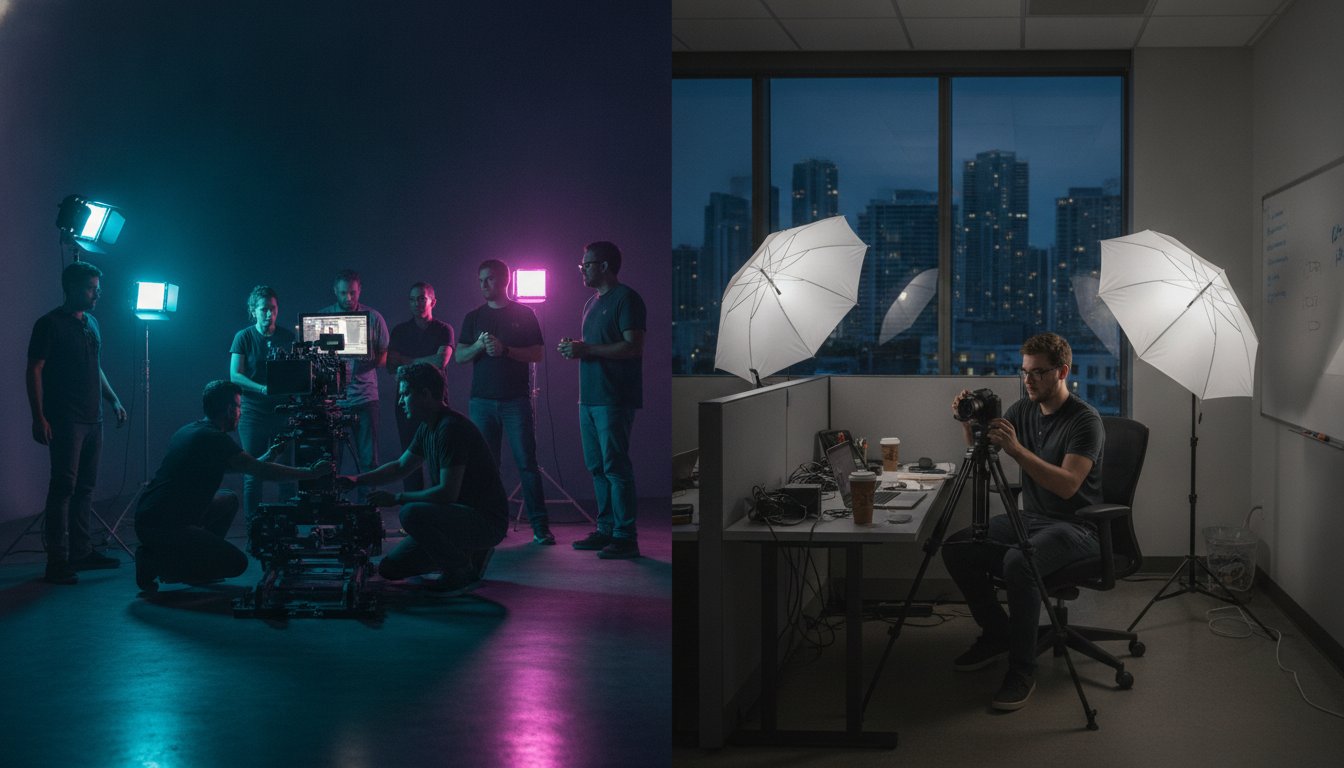
If your organization produces fewer than 35 high-quality video assets annually, the cost-per-minute of maintaining an in-house team is roughly 45% higher than partnering with a specialized firm. The debate over a video production agency vs in house team often centers on convenience, but the reality for many leaders involves managing creative burnout, outdated gear, and a plateau in visual storytelling. You likely recognize that high-stakes events and corporate brand films require a level of polish that internal teams struggle to maintain consistently. It's frustrating to watch your ROI stagnate while your production equipment depreciates by 30% the moment it's purchased.
We understand that this choice is about more than just a line item on a budget; it's about protecting your brand's reputation during critical moments. This guide provides a clear strategic framework to help you decide which model offers the best ROI for your 2026 goals. We'll explore how to maximize production quality for high-stakes events and build a scalable video growth strategy that keeps your content ahead of the curve. You'll gain the clarity needed to secure the expertise required for cinematic, broadcast-standard storytelling without the hidden taxes of internal expansion.
Key Takeaways
- Understand the critical differences between agency, in-house, and hybrid models to align your production strategy with 2026 business objectives.
- Evaluate the total cost of ownership for internal teams, including equipment depreciation and talent overhead, when comparing a video production agency vs in house setup.
- Identify high-stakes scenarios like broadcast-quality livestreaming where the risk of technical failure justifies partnering with an elite production firm.
- Learn how to escape the "internal echo chamber" by incorporating external strategic perspectives that drive cinematic storytelling and brand growth.
- Apply a 5-point decision framework to determine the exact tipping point where scaling requires a shift from internal staff to professional agency support.
The Video Production Landscape: Agency, In-House, and Hybrid Models
The choice between a video production agency vs in house team has evolved into a nuanced strategic decision rather than a simple cost calculation. By 2026, three primary structures have emerged to serve the corporate world: dedicated in-house departments, specialized external agencies, and the increasingly popular hybrid model. While many brands start with a single internal videographer, this "one-man-band" approach often falters as the need for high-stakes content grows. A single individual simply cannot master the diverse skill sets required for broadcast-quality livestreaming, cinematic brand films, and data-driven video growth strategies simultaneously. As your brand scales, the complexity of your messaging requires a more robust infrastructure.
The In-House Model: Proximity and Volume
Internal teams offer the undeniable advantage of proximity. These professionals live and breathe your brand's culture daily; they understand the nuances of your corporate identity better than any casual observer. This model excels at high-volume, low-friction content such as quick social media updates, internal comms, or basic training and education videos. However, a distinct breaking point exists. When the production schedule becomes saturated with routine tasks, creative stagnation often sets in. The quality of high-impact assets begins to suffer as the team prioritizes speed over cinematic excellence, leading to a "sameness" in your visual output that can dilute brand authority over time.
The Agency Model: Specialized Expertise and High-Stakes Execution
Partnering with an elite agency provides a strategic extension to your marketing team. Agencies offer an "outsider perspective" that is vital for breakthrough brand storytelling. They often identify unique narrative angles that internal teams might overlook due to organizational bias or the "internal echo chamber." Beyond creative strategy, the technical advantages are significant. An agency provides immediate access to broadcast-grade equipment and specialized crews without the massive capital expenditure or maintenance costs associated with a professional studio setup. This level of reliability is paramount for events and livestreaming. In these high-pressure environments, technical failure is not an option; the cost of a "missed moment" during a global conference is unacceptably high.
Ultimately, the landscape is shifting toward a collaborative future. Savvy organizations no longer view the video production agency vs in house debate as a binary conflict. Instead, they utilize a hybrid approach, leveraging the agency for high-impact, strategic projects that define the brand's public image while maintaining an internal presence for agile, day-to-day communication. This partnership allows for a scalable video growth strategy that balances daily engagement with the prestige of broadcast-standard production. It ensures your brand remains both present and premium in an increasingly crowded digital marketplace.
The True Cost of Production: Equipment, Talent, and Hidden Overhead
Analyzing the financial implications of a video production agency vs in house operation requires looking beyond the sticker price of a camera. While an internal hire might seem like a fixed cost that's easy to budget, the "hidden taxes" of in-house production frequently lead to budget bloat. For most organizations producing four to eight videos monthly, an agency partnership is 40% to 60% more cost-effective than maintaining a full-time internal department. This efficiency stems from the fact that agencies spread their overhead across multiple clients, whereas an in-house team represents a singular, heavy financial commitment regardless of your current output.
The Capital Expenditure Trap
Building a professional 2026 studio setup is a significant capital commitment. A broadcast-ready environment requires more than just a lens and a tripod. To compete at a premium level, your inventory must include:
- High-dynamic-range (HDR) cinema cameras capable of 8K capture
- Professional multi-point LED lighting arrays with remote DMX control
- Broadcast-grade audio interfaces and redundant wireless microphone systems
- High-performance editing workstations with specialized GPU acceleration
- Hardware-based livestreaming switchers for high-stakes corporate events
Buying the camera is only 20% of the total technical cost. The remaining 80% is consumed by support gear, specialized insurance, and the high-performance servers required to manage massive video files. Furthermore, equipment in this industry depreciates by roughly 30% the moment it's unboxed. By the time your team masters a specific kit, the technology has often moved toward new standards, forcing another round of expensive upgrades.
Talent Acquisition and Retention in South Florida
In the competitive Miami and Fort Lauderdale markets, securing top-tier creative talent is an uphill battle. A video producer's base salary in 2026 typically ranges from $85,000 to $110,000. However, once you factor in benefits, payroll taxes, and software subscriptions like the Adobe Creative Cloud or AI-driven post-production tools, the fully loaded cost often reaches $168,000 in the first year. For many South Florida firms, the lack of a diverse career path for in-house videographers leads to creative burnout and high turnover. Agencies avoid this by maintaining a specialized talent pool that stays sharp by working across various industries. This allows you to tap into a Video Growth Strategy that evolves with the market, rather than being limited by the skill set of a single hire.
Ultimately, the decision hinges on the "cost of readiness." An agency maintains a state-of-the-art infrastructure so you don't have to. You pay for the results delivered, not the downtime between projects or the maintenance of a studio that sits empty half the week. This shift from a fixed overhead to a results-based investment provides the financial flexibility necessary to scale your video efforts as your brand grows.
Creative and Strategic Depth: Overcoming the "Internal Echo Chamber"
One of the most significant risks in the video production agency vs in house debate is the development of an "internal echo chamber." Over time, internal teams often transition from creative visionaries to organizational order takers. They become so immersed in company culture that they lose the ability to see the brand through a fresh, objective lens. This proximity can lead to safe, predictable content that fails to capture attention in a competitive market. A specialized agency, by contrast, operates as a strategic consultant, bringing a wealth of experience from diverse industries to every project. This cross-pollination of ideas is vital for maintaining a brand's competitive edge.
In 2026, simply producing content isn't enough to drive growth. Success requires video growth strategy consulting to ensure every frame serves a measurable business objective. While an in-house videographer might focus on completing a task list, an agency partner focuses on the long-term impact of the content series. They have the authority to push back on ineffective ideas and suggest bold new directions that internal staff might avoid to prevent organizational friction.
The Outside Perspective: Why it Matters for Brand Films
Agencies possess the unique ability to identify brand stories that internal teams frequently overlook because they're too close to the subject. This outside perspective is what transforms a standard corporate update into a cinematic brand film. The "cinematic" difference isn't just about the camera used; it's about the technical and emotional nuances of purposeful lighting, rhythmic pacing, and emotional resonance. Agencies are hired to push boundaries and challenge assumptions. They bring a level of craft and storytelling sophistication that ensures your high-impact assets stand out rather than blending into the background noise of corporate communication.
Strategic Alignment with Business Goals
A professional agency doesn't just make a video; it builds a comprehensive growth roadmap. By analyzing cross-industry trends and audience engagement data, external partners ensure that your content is both visually stunning and functionally effective. This is particularly crucial when developing professional video for sales teams. High-conversion assets require a specific strategic approach that identifies customer pain points and drives revenue. This level of specialization is something generalist internal teams rarely possess. By leveraging an agency’s broader market view, you ensure your video assets contribute directly to your organization’s bottom line rather than just existing as vanity projects.

High-Stakes Scenarios: When In-House Capabilities Reach Their Limit
Every organization eventually encounters a project where the stakes are simply too high to leave to chance. In the strategic comparison of a video production agency vs in house team, the "cost of failure" often becomes the ultimate deciding factor. A technical glitch during a global town hall or a poorly lit brand launch doesn't just look unprofessional; it actively erodes the trust you've built with your audience. While your internal team might be excellent at capturing daily office culture or basic social clips, they often lack the specialized stress-testing and redundant infrastructure required for high-pressure, broadcast-standard execution. When your message must reach a global audience without interruption, the reliability of a professional partner becomes your most valuable asset.
The Livestreaming Reliability Gap
Redundant systems are the hallmark of an elite agency partnership. Most in-house setups rely on a single office internet connection or a basic software-based encoder. Professional agencies provide triple redundancy, including bonded cellular internet, secondary power supplies, and hardware-based encoding paths that ensure the stream never drops. A dedicated Technical Director acts as the mission control for your broadcast, managing multi-camera switching and real-time audio leveling to prevent disasters before they happen. This level of technical oversight is particularly vital when managing hybrid events in complex South Florida venues. From the high-RF environments of Miami Beach convention centers to the logistical hurdles of downtown Fort Lauderdale hotels, an agency brings the experience needed to navigate local infrastructure risks that an internal team hasn't yet faced.
Cinematic Brand Identity vs. Instructional Content
High-retention content requires a level of polish that goes beyond basic clarity. While daily social updates can thrive with a "raw" aesthetic, your core training assets and brand films require a cinematic touch to maintain engagement. Professional instructional video production relies on precise pacing, visual hierarchy, and high-end motion graphics to ensure viewers actually retain information. If the production value is low, your authority as an expert is immediately questioned by your clients and employees. Partnering with an agency ensures that your most important messaging receives the polish it deserves, reinforcing your brand's premium positioning while your internal team stays focused on agile, high-volume communication.
If you're planning a high-stakes corporate gathering where quality is non-negotiable, ensure your technical execution is flawless by partnering with an elite team for your Events & Livestreaming needs.
The Decision Framework: Choosing Your Path for 2026
Deciding between a video production agency vs in house team requires an honest assessment of your organization's long-term goals and technical risk tolerance. For most scaling brands, the choice isn't about choosing one over the other; it's about identifying the exact tipping point where internal resources no longer provide the necessary ROI. To help you navigate this transition, we've developed a five-point strategic checklist for your 2026 roadmap:
- Production Volume vs. Complexity: Are you producing more than 12 low-complexity videos per month, or do you require 4-8 high-impact strategic assets?
- Technical Risk Assessment: Is the "cost of failure" for your upcoming events or brand films unacceptably high?
- Strategic Maturity: Do you need an order taker to execute basic tasks, or a growth consultant to build a revenue-driving roadmap?
- Capital Allocation: Can your budget absorb the immediate 30% depreciation of professional gear and annual software licensing fees?
- Creative Freshness: Is your messaging suffering from the stagnation of an internal echo chamber?
When to Build In-House
An internal team is the logical choice when your primary need is a high volume of low-complexity content. If your marketing strategy relies on daily TikTok updates, rapid-fire internal Slack announcements, or on-site filming that requires zero setup time, a full-time hire provides the necessary agility. This model works best when budget constraints strictly prohibit external fees and the visual polish of the final product is secondary to the speed of the message.
When to Partner with an Agency
Agencies are built for high-stakes execution and cinematic brand identity. You should seek an external partner when your goals include broadcast-quality livestreams, high-conversion sales videos, or a cinematic brand film that defines your market position. An agency provides the strategic depth required to turn video from a cost center into a growth engine. By leveraging a specialized partner, you gain access to a video growth strategy that uses cross-industry data to drive measurable results, ensuring your content actually contributes to the bottom line.
The most successful organizations in 2026 utilize a hybrid model. This approach keeps your internal team focused on agile, daily communication while an agency partner handles the strategic heavy lifting and high-end production. Integrating a partner like Miami Video Production into your workflow allows you to scale without the "hidden taxes" of internal expansion. Your internal team manages the brand voice; we provide the cinematic excellence and technical reliability that ensures your message resonates. To begin building this foundation, we recommend starting with a strategic hire in Miami to set the standard for your future visual communication.
Strategic Execution for Your 2026 Video Roadmap
Selecting the right path in the video production agency vs in house debate determines the trajectory of your brand's authority. The decision rests on balancing high-volume internal agility with the specialized expertise required for high-stakes execution. Whether you're navigating the hidden costs of professional gear or seeking to escape an internal creative plateau, the goal remains the same: maximizing the impact of every frame. A hybrid approach allows your organization to maintain its unique culture while leveraging elite technical infrastructure for critical moments.
By prioritizing cinematic quality and broadcast-standard reliability, you ensure your message resonates with precision and prestige. This strategic alignment turns your video assets from simple communication tools into powerful engines for growth and brand trust. Your 2026 video strategy deserves a partner committed to excellence and technical security.
Partner with Miami Video Production for broadcast-quality content and strategic growth. We provide broadcast-quality livestreaming for high-stakes events, cinematic corporate brand films, and strategic video growth consulting for South Florida brands. Let's build a roadmap that drives measurable results and positions your brand as a definitive leader in your field.
Frequently Asked Questions
Is it cheaper to hire a video production agency or build an in-house team?
An agency partnership is generally more cost-effective for organizations producing fewer than 35 high-quality assets per year. While in-house teams seem like a fixed cost, the fully loaded expense of a single producer often reaches $168,000 annually when factoring in benefits and equipment. For medium-volume needs of four to eight videos per month, using an agency is typically 40% to 60% more economical than maintaining a full internal department.
What are the main benefits of a hybrid video production model?
The hybrid model offers the best of both worlds by combining internal brand proximity with external strategic depth. Your in-house staff handles agile, high-volume tasks like social media updates and internal communications. Meanwhile, you leverage an agency for high-stakes events and cinematic brand films. This structure prevents creative burnout and ensures your most important messaging receives broadcast-standard polish without the overhead of a massive internal studio.
When should a company transition from in-house video to an agency?
Transitioning becomes necessary when the complexity of your projects exceeds your internal team's technical capabilities or when creative quality begins to plateau. If your organization is planning high-stakes events or requires a cinematic brand identity to compete, a specialized partner is vital. When the cost of a technical failure or a missed narrative opportunity becomes unacceptably high, the reliability of a professional agency provides the necessary security.
Can an in-house team handle professional livestreaming for large events?
Most in-house teams lack the redundant infrastructure required for broadcast-quality livestreaming at scale. While they can manage basic webinars, large-scale corporate conferences require triple-redundant internet, hardware-based encoding, and a dedicated Technical Director. Agencies provide these fail-safes to ensure the stream never drops. Relying on a single office connection or software-based encoder during a global town hall introduces a level of risk that most organizations find unacceptable.
What equipment does an in-house video studio actually need in 2026?
A professional internal studio requires HDR cinema cameras, multi-point LED arrays with DMX control, and broadcast-grade audio interfaces. You also need high-performance workstations capable of 8K post-production and secure, redundant servers for massive data management. It's vital to remember that this technology depreciates by roughly 30% immediately upon purchase. Maintaining a competitive edge requires a continuous cycle of expensive hardware and software upgrades that often outpace internal budgets.
How does production quality affect brand perception for B2B companies?
Production quality serves as a direct proxy for brand authority and reliability in the B2B sector. High-end visual storytelling positions your organization as a premium leader that values precision and excellence. Conversely, low-polish video can inadvertently signal a lack of resources or attention to detail, which erodes trust with sophisticated clients. Cinematic aesthetics and clear, professional audio are essential components of a modern strategy that drives long-term brand growth.
Does a video production agency provide better ROI than an internal team?
A video production agency vs in house comparison often reveals that agencies deliver higher ROI on strategic, high-stakes projects. Agencies focus on video growth strategy and measurable business outcomes rather than just completing a task list. Because they work across multiple industries, they apply proven trends and data-driven insights that internal teams might miss. You pay for results and strategic impact, rather than the downtime and maintenance associated with permanent staff.
What is the most common mistake when building an in-house video department?
The most frequent error is underestimating the "hidden tax" of internal expansion. Many leaders focus solely on base salaries but ignore the costs of payroll taxes, specialized insurance, and the rapid pace of gear depreciation. Additionally, companies often fail to provide a clear career path for creative talent, leading to high turnover and the loss of institutional knowledge. This cycle of hiring and retraining often costs significantly more than a consistent agency retainer.
