
Cinematic Brand Storytelling in West Palm Beach: A Business Buying Guide
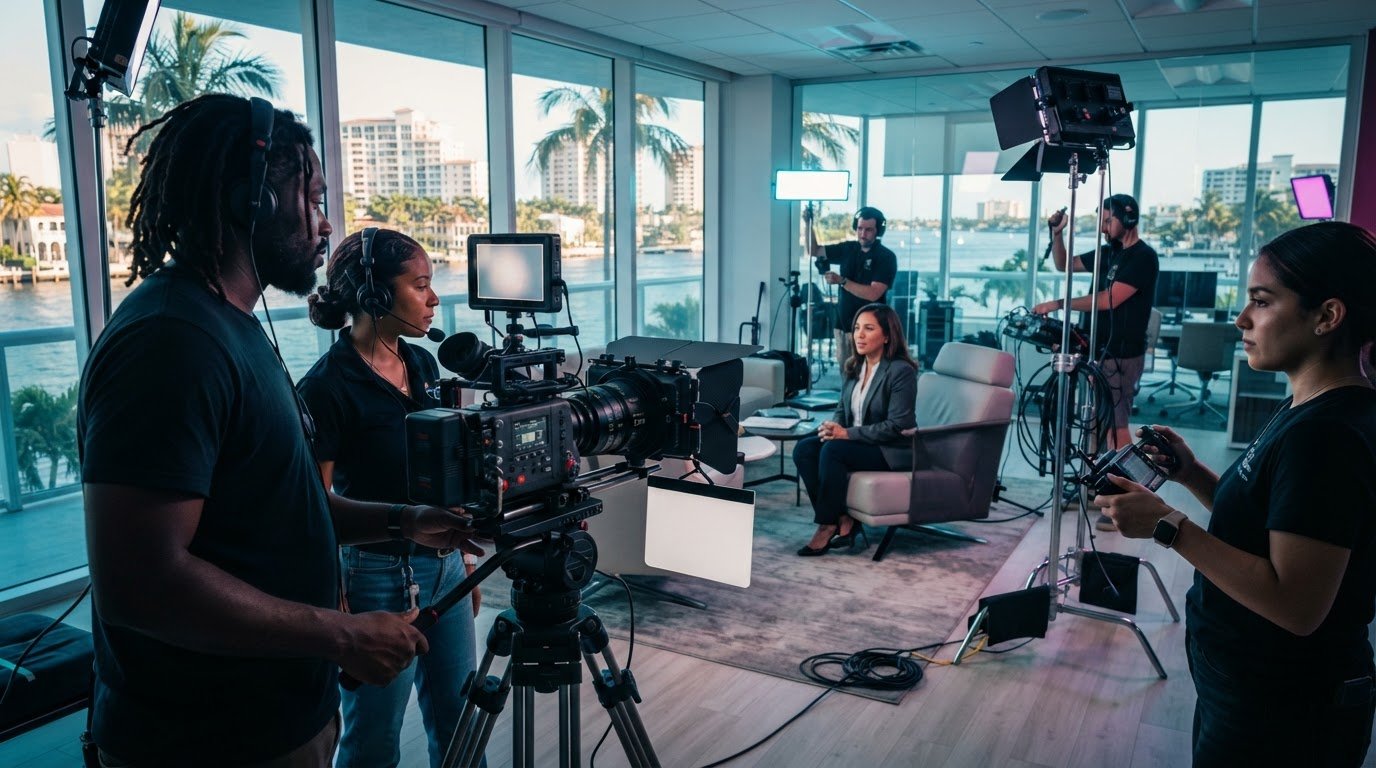
A beautiful brand film can still miss the mark if viewers leave without understanding what makes your company distinctive. For businesses exploring cinematic brand storytelling west palm beach, the key is to make every visual choice serve a clear business truth, not simply create an impressive look.
You may already know your company has a story worth telling. The challenge is deciding which moments, people, and ideas belong in the film, and how to keep the result emotionally engaging and commercially clear. A strong production partnership connects story development with cinematic execution from the start.
This guide will help you shape a focused story that reflects your company’s identity and assess whether a production plan fits your goals and audience. You’ll learn how to consider creative direction, production scope, and the film’s role in your communications before work begins. When planning, filming, and post-production editing are aligned around a shared purpose, the finished film can do more than look polished: it can communicate why your business matters.
Key Takeaways
- Make cinematic brand storytelling west palm beach serve a clear business truth, so the film’s visuals reinforce what makes your company distinctive.
- Build the story in sequence: identify your audience, clarify the business truth and central message, then shape the narrative, visual approach, and intended use.
- Compare a brand film with a company overview or campaign video by matching its objective, audience, narrative focus, visual treatment, and distribution to your needs.
- Align stakeholders on the key message before filming to reduce conflicting input and prepare your team for production.
- Understand how pre-production planning, filming with professional crews, and post-production editing connect story development with cinematic execution.
Why West Palm Beach businesses use cinematic brand storytelling to make their message memorable
A company can explain its services in a sentence and still leave a prospective customer unsure why they matter. The challenge for a West Palm Beach business is to connect what it does with the need it addresses, the approach it brings, and the people behind the work. A list of offerings provides information; a well-shaped story gives that information context.
Cinematic brand storytelling is a business narrative shaped through images, sound, and structure. Choices about what viewers see, hear, and learn first can make a company’s identity easier to understand. The art of storytelling offers a broader foundation, but a brand film needs a defined audience and communication purpose. Those guide the visual ambition, helping each scene support the message rather than compete with it.
A useful definition: A brand story is a purposeful account of a customer need and a company’s response, not a sequence of promotional shots. A film can clarify that account and present it with care, but it can’t promise a particular business outcome. Its role is to communicate with intention and give viewers a clearer understanding of the organization and its point of view.
What makes a brand story different from a company overview?
A company overview often moves through services, history, and capabilities. A brand story gives those facts a narrative thread: a customer faces a need, and the company responds through its choices, expertise, or way of working. The customer’s need provides context without requiring the film to make claims about results.
Values become more persuasive when viewers can see them in action. A commitment to care, for example, might come through in how a team listens or makes a decision, if that reflects the real organization. The story should be grounded in the company’s actual people and practices, not a generic template that could fit any business.
Which West Palm Beach businesses can benefit from a brand film?
A brand film can help organizations explain their identity, approach, or customer value more coherently. It may suit an established company with a complex story, a growing team clarifying how it works, or an organization refining its market position. Company size is less important than whether a focused narrative can help an intended audience understand what the business stands for.
For businesses serving West Palm Beach and Palm Beach County, local relevance starts with speaking to the people and organizations they want to reach. A film can reflect the company’s real work and perspective in this regional context without leaning on broad claims about the market. Strong cinematic brand storytelling west palm beach begins with that fit: a specific audience, a truthful message, and a visual approach that helps communicate both.
Shaping a cinematic brand story: from truth to film
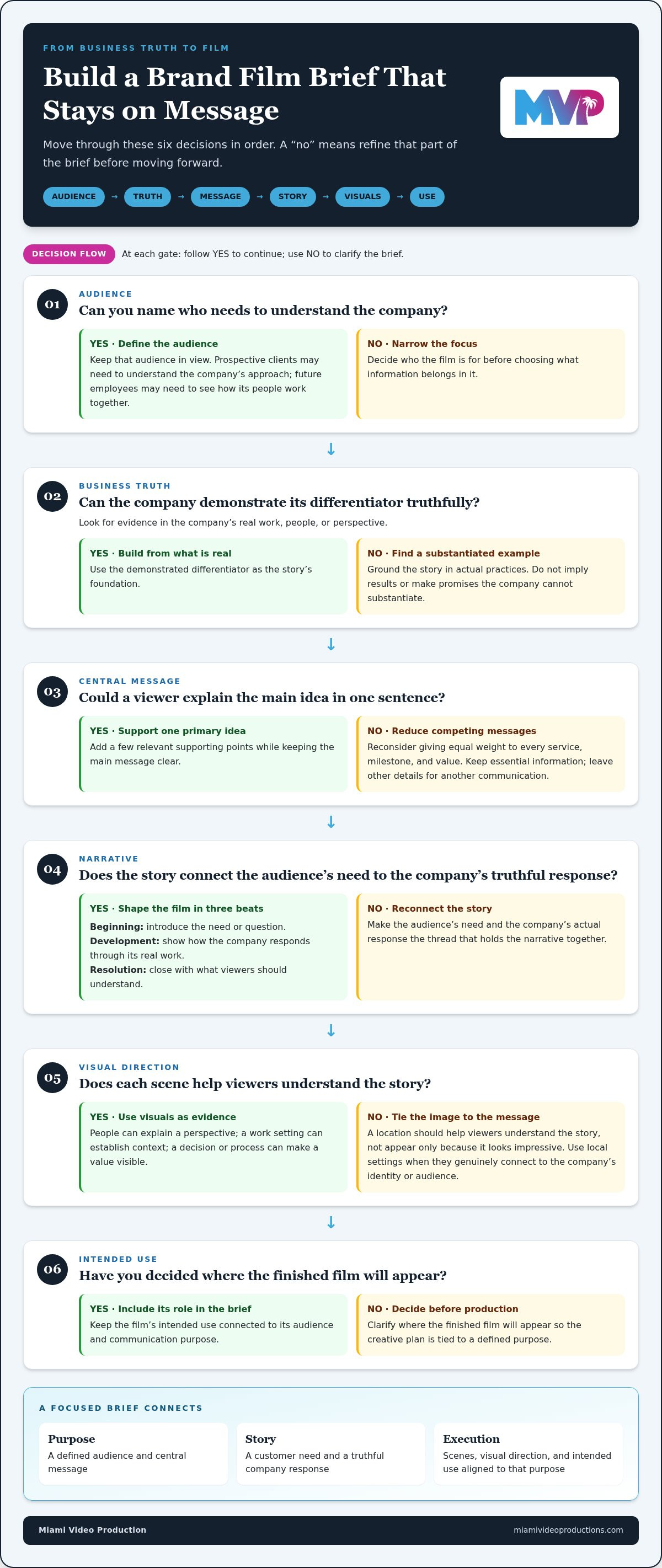
A strong film brief begins before anyone chooses a location or camera angle. Use a deliberate sequence: define the audience, identify a business truth, set one central message, develop a narrative, choose a visual approach, and decide where the finished film will appear. This order keeps creative decisions connected to the company’s purpose.
Start with the audience, business truth, and one central message
First, be specific about who needs to understand the company. A film for prospective clients may need to explain the organization’s approach, while one for future employees may focus on how its people work together. Ask what each audience should remember after watching. That answer helps separate essential information from details better suited to another communication.
Next, identify a differentiator the company can demonstrate through its work, people, or perspective. A service firm, for example, might show how its team makes a complex process easier to understand, if that reflects its actual practice. The customer’s need can frame the story, but the film should not imply results or make promises the company can’t substantiate.
Choose one primary idea, then support it with a few relevant points. Giving equal weight to every service, milestone, and value can blur the message. Try this test: could a viewer explain the main idea in a sentence after watching? If not, the brief may be carrying too many competing messages.
Turn the message into a cinematic narrative and visual direction
The central narrative is the film’s organizing idea: the thread that connects the audience’s need to the company’s truthful response. From there, shape a beginning, development, and resolution. Introduce the need or question, show how the company responds through its real work, then close with the clearest expression of what viewers should understand. This structure gives the film direction without forcing the story into a formula.
Translate the narrative into scenes that provide evidence. People can explain a perspective; a work setting can establish context; a decision or process can make a value visible. A location should help viewers understand the story, not appear only because it looks impressive. For cinematic brand storytelling west palm beach, local settings can become part of the visual language when they genuinely connect to the company’s identity or audience.
Emotional resonance comes from relevant detail, not vague sentiment. Tone, pacing, imagery, and sound should reinforce the message. Restrained music may suit a thoughtful, precise story; a more energetic rhythm may support a fast-moving team. Choose based on the organization and intended viewers, not a trend.
Define intended use before production. A film for a company website may need a different opening or pace from one shown in a presentation. Share the audience, central message, narrative, visual direction, and planned use in a concise brief. A cinematic corporate brand-film partnership can connect story development with planning, filming, and editing.
How to evaluate a cinematic brand storytelling approach before commissioning a film
Before comparing visual styles or production polish, test whether the concept has a clear message. Can you identify who the film is for, what it should communicate, and why that message matters to the viewer? If those answers are unclear, impressive imagery won’t solve the strategic problem. Start with the film’s job, then consider how the creative and production plan will deliver it.
Use these criteria to compare possible approaches:
- Objective: What should the film help explain or communicate?
- Audience: Who needs to understand the message?
- Narrative focus: What central idea or customer need will organize the story?
- Visual treatment: How will imagery, sound, and pacing reinforce that idea?
- Intended distribution: Where will viewers encounter the film, such as a company website or presentation?
For cinematic brand storytelling west palm beach, this comparison keeps local context and creative ambition in service of a defined communication purpose. Cinematic doesn’t have to mean spectacle. A considered scene of a team at work may communicate an organization’s approach more clearly than a dramatic shot unrelated to the story. Each production choice should have a reason.
Brand film, company overview, or campaign video: what fits the goal?
These formats differ by communication job, not assumed quality. A cinematic brand film builds a narrative around the company’s identity, perspective, or response to a customer need. A company overview usually provides a broader introduction to the organization, its work, and its capabilities. A campaign-specific video focuses on a particular message or initiative for a defined audience.
A broader company narrative may suit an organization that needs a coherent introduction across several communication needs. A campaign video may fit better when the message is narrower, such as introducing one initiative. For more context on how formats can support business communication, explore this cinematic corporate brand films strategic guide.
What signals a strong creative and production plan?
A considered plan connects a defined audience and central message to a story outline and visual direction. Look for a clear explanation of how proposed scenes support the narrative. If an image, location, or stylistic flourish doesn’t clarify the idea, it may distract rather than help.
Production also works best as connected stages. Pre-production planning develops the story and prepares the project; filming puts that direction into action; post-production editing shapes the recorded material into a cohesive film. Assessing these stages together helps you judge whether the concept is creatively compelling and grounded in a practical plan.
How to prepare your West Palm Beach team for a brand-film production
A focused production starts with clear input from the people who know the organization. Your team doesn’t need to understand cameras or editing; it needs to agree on what the film should communicate and provide the context that makes the story accurate. Preparing those essentials connects pre-production planning, filming, and editing into one coherent project.
What to gather before pre-production begins
Bring together the information and people that can guide creative decisions. A practical starting checklist:
- Purpose and audience: State why the film is being made, who should watch it, and what they should understand.
- Current messaging: Share the company’s purpose, key messages, and existing language so the film feels consistent with its communications.
- People and examples: Identify team members, customer needs, or real work practices that can help illustrate the story.
- Potential locations and materials: Note relevant work settings and gather brand materials that may inform the visual direction.
- One decision-maker: Choose someone to consolidate stakeholder input, resolve conflicting preferences, and guide approvals.
Stakeholders may describe the company from different perspectives. Leadership might emphasize its history, while customer-facing staff focus on how the work addresses a need. Coordinating those views before filming helps distinguish the film’s central message from supporting details. The goal isn’t to erase useful differences; it’s to agree on which ideas belong in this story.
A focused brief keeps every creative decision aligned with the message the team has agreed to communicate.
How to make filming and review more focused
Before filming, make sure participants understand the core message and their role in expressing it. Someone sharing a firsthand perspective, for example, should speak to what they genuinely know rather than trying to deliver every company talking point. That preparation supports a more natural, coherent story without requiring anyone to become a production expert.
- Confirm that participants understand the film’s audience and central idea.
- Keep examples tied to real company practices and customer needs.
- Route feedback through the nominated decision-maker to avoid conflicting direction.
- Review edits for accuracy, audience relevance, and consistency with the agreed brief.
Each stage contributes differently: pre-production planning aligns the story and project inputs, filming captures the planned material, and editing shapes that material into a finished film. During review, separate factual corrections from personal preferences. Before requesting a change, ask whether it improves clarity or supports the communication objective.
For cinematic brand storytelling west palm beach, coordinated preparation helps keep the company’s perspective, production plan, and finished film working toward the same purpose. Plan a corporate brand-film production with Miami Video Production to bring your story from preparation through filming and post-production.
Partner with Miami Video Production for cinematic brand storytelling in West Palm Beach
For businesses in West Palm Beach, a corporate brand film is strongest when its creative direction serves a clear business purpose. Miami Video Production creates cinematic corporate brand films for local businesses, bringing story development and production together as one project. The collaboration begins by defining what the company needs to communicate, who needs to hear it, and what will make the story feel true to the organization.
That direction guides the production stages. Pre-production planning aligns the business goal with the narrative and execution. Filming with professional crews captures the material shaped by that direction, and post-production editing brings the footage together into a cohesive film. The project scope is shaped around the agreed purpose, rather than treating production as a set of disconnected tasks.
What a brand-film collaboration can cover
The first step is to align on the film’s audience, business purpose, central story, and creative direction. These decisions establish the foundation for planning and give stakeholders a shared understanding of what the film is meant to communicate. They also provide a reference point as the project moves from discussion into production.
Once the direction is established, filming and editing follow the needs of the approved story. People, settings, and scenes are considered in relation to the narrative, while post-production shapes the captured material into a finished piece. For cinematic brand storytelling west palm beach, connecting business intent with cinematic execution helps keep the film focused on the company’s identity and audience.
Each project has its own scope. The useful question is whether the planned work supports the story and intended use, not whether it follows a fixed template. A well-aligned process gives creative decisions a clear purpose while leaving room for the company’s real character to come through.
The next step for a West Palm Beach brand-film project
Before beginning a project discussion, outline the audience you want to reach, the communication challenge you’re addressing, and how you expect to use the film. Bring existing brand materials and the perspectives of key stakeholders, especially where they can clarify the company’s purpose or how it serves customers. You don’t need a finished script; a clear starting point helps shape a productive conversation about story and approach.
From there, the project can be framed around the message that matters most to your organization. Miami Video Production works with South Florida businesses to connect planning, filming, and editing within a cinematic corporate brand-film project. Learn more about the cinematic brand-film production process.
Give your company’s story a clear next step
The most useful starting point for cinematic brand storytelling west palm beach isn’t a shot list. It’s a concise statement of what you want the right audience to understand about your company, and why that understanding matters now. That decision gives your team a practical way to judge creative ideas: does this choice make the message clearer, more distinctive, or easier to connect with?
Bring that starting point into a project conversation, even if the story is still taking shape. Your intended audience, communication challenge, and preferred use for the film can guide the discussion and establish a direction that reflects your organization. From there, creative development can turn a business priority into a focused narrative and production plan.
When you’re ready to take that step, discuss your cinematic brand-film project with Miami Video Production. A thoughtful conversation is a strong beginning for a film that communicates with purpose and feels true to your company.
Frequently Asked Questions
What is cinematic brand storytelling?
Cinematic brand storytelling combines a company’s message with deliberate imagery, sound, and a narrative that gives viewers context. Rather than listing capabilities, a film might follow how a team approaches a real customer question, showing the people and thinking behind its work. The creative treatment should support what the organization can truthfully demonstrate. A polished presentation alone isn’t the story; the story gives the visuals a meaningful purpose.
How can a brand film help a West Palm Beach business communicate its story?
A brand film can help a West Palm Beach business make its identity and approach easier for viewers to grasp through real people, work settings, and carefully chosen details. The phrase cinematic brand storytelling west palm beach describes this kind of locally relevant corporate narrative, not a promise of sales results. Miami Video Production serves South Florida businesses in West Palm Beach, Miami, Broward, Fort Lauderdale, North Miami, Fort Myers, and Naples.
What should a cinematic brand story include?
Include details that make the company’s point of view credible: a real customer concern, relevant people who can speak from experience, and examples that show how the organization thinks or works. Viewers should be able to distinguish what the company actually does from what it hopes to convey. Avoid unsupported claims, and leave out background details that don’t help the audience understand the central idea.
How is a cinematic brand film different from a company overview video?
A cinematic brand film organizes information around a story and point of view, while a company overview generally introduces the organization and describes its work more broadly. An overview might introduce several departments, while a brand film could focus on one shared principle that shapes how those teams serve customers. Either format can be thoughtfully produced. The right choice depends on whether the communication need is a narrative or a general introduction.
How do you plan a brand film before filming begins?
Start with a short written brief that names the primary audience, the film’s purpose, and the one idea viewers should retain. Then note essential facts, potential participants, and subjects the film should avoid. Separate must-have content from optional details so the concept stays manageable. Before filming, assign one person to consolidate internal feedback and verify that names, roles, and statements are accurate and consistent with company communications.
How much does cinematic brand storytelling cost?
There isn’t one set cost for a cinematic brand film; project fees depend on its scope and production needs. Crew requirements, filming locations, and the complexity of post-production can all shape the plan. Miami Video Production produces corporate brand films on a project basis, including planning, professional crews, filming, and editing. Outline the communication goal and intended scope to start a project-specific discussion.
Can one brand film serve more than one audience or business purpose?
Yes, a film can speak to more than one audience when those viewers share a central reason to understand the company. Prospective customers and potential employees, for example, may both benefit from seeing the organization’s working principles. Still, give the film one primary audience and purpose. If viewers need different information or next steps, forcing everything into one narrative can weaken its focus; separate communication pieces may serve those needs more clearly.
